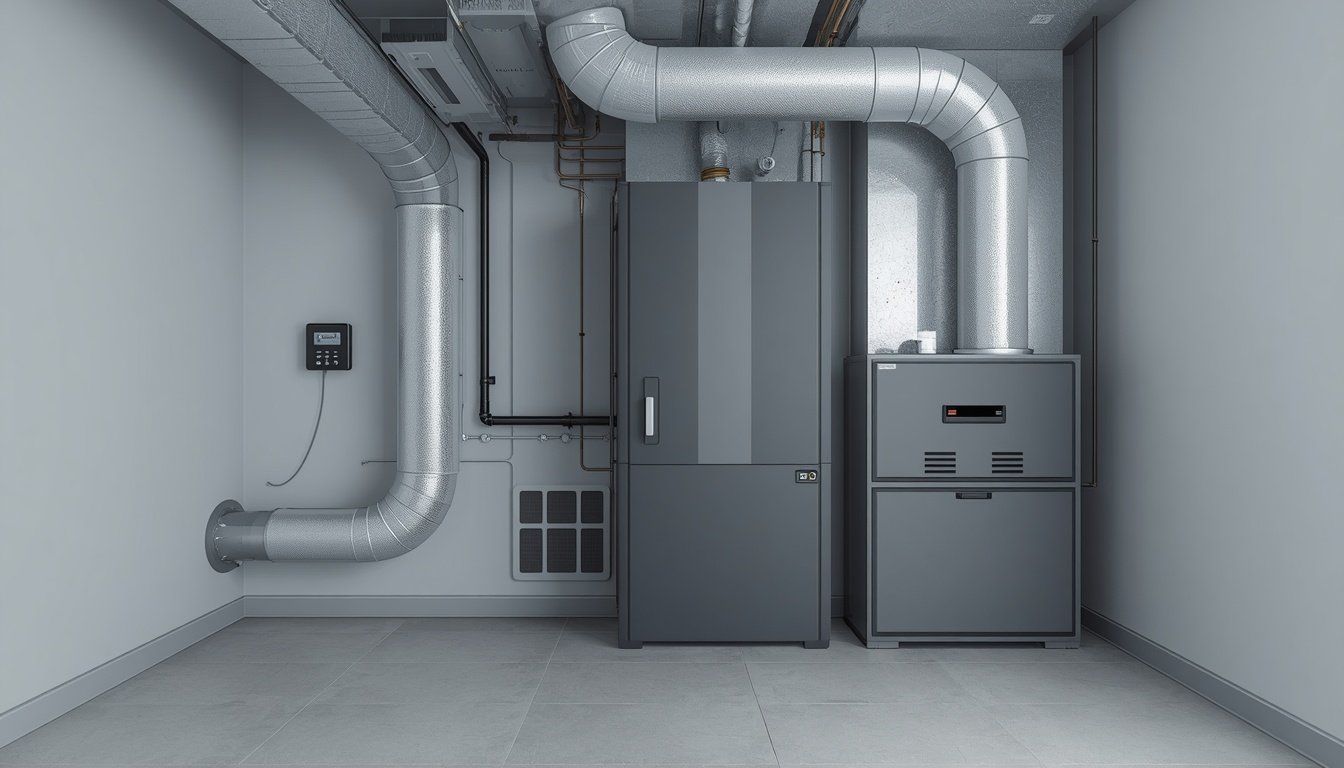
A complete home air quality setup uses filtration, ventilation, humidity control, source control, and monitoring to improve the air across the whole house rather than only one room. It may include an HVAC-connected media air cleaner, higher-quality filters, ERV or HRV ventilation, humidity equipment, carbon dioxide monitoring, and strategies for smoke, dust, allergens, odors, and indoor pollutants. The right setup depends on what problem you are trying to solve, how your HVAC system is built, and whether the issue comes from indoor sources, outdoor air, moisture, or poor ventilation.
Many homeowners think of air quality as a single-product problem, but it is usually a system issue. A better filter may help with particles, but it will not bring in fresh air. A ventilation system may improve air exchange, but it will not remove every pollutant by itself. A dehumidifier may reduce dampness, but it will not solve smoke, dust, or carbon dioxide buildup. If you are comparing installed filtration options, the guide to the best whole-house air purifier or filtration system is a useful place to start.
What This Guide Covers
This guide explains the main parts of whole-home air quality planning and how they work together. It covers filtration, ventilation, humidity, indoor pollutant sources, outdoor air problems, monitoring, and the limits of common home air quality products.
The key point is that air quality is not only about dust. It can include particles, pollen, smoke, pet dander, odors, volatile organic compounds, stale air, excess humidity, dry air, and poor air exchange. Some issues are best handled by filtering air that moves through the HVAC system. Others are better handled by removing the source, adding ventilation, balancing humidity, or improving maintenance.
This guide is meant to help you understand the full landscape before choosing equipment. A large installed filtration system may make sense for one home, while another home may need better ventilation or humidity control first. The article on indoor air quality beyond humidity explains why moisture is only one part of the larger indoor air quality picture.
How Whole-House Air Quality Systems Work
Whole-home air quality systems work by improving the air that circulates through the home and by reducing the amount of unwanted material entering or remaining indoors. In a forced-air HVAC system, air is pulled through return ducts, passes through a filter or air cleaner, and is then supplied back into living spaces. Upgrading filtration can help capture more airborne particles, but the system must still maintain enough airflow to operate properly.
Ventilation works differently. Instead of filtering the same indoor air repeatedly, a ventilation system exchanges indoor air with outdoor air in a controlled way. ERV and HRV systems are common examples. They can support fresh air exchange while recovering some energy from outgoing air. For homes that feel stale or tightly sealed, the whole-house ventilation systems guide explains how that part of the system fits in.
Humidity control also affects air quality. High humidity can make a home feel damp and may contribute to musty smells or moisture problems. Very dry air can feel uncomfortable and may make some particles stay airborne more easily. A balanced approach often combines filtration, ventilation, humidity control, and source reduction rather than relying on one device to solve everything.
Common Use Cases
One common use case is a home with dust, pollen, pet dander, or general airborne particles moving through the HVAC system. In that situation, a better filter or media air cleaner may be helpful, as long as it is compatible with the system. The guide on MERV ratings for whole-home filters can help explain how filtration levels affect particle capture and airflow considerations.
Another use case is wildfire smoke or poor outdoor air. In those situations, the goal may be to reduce how much outdoor smoke enters the home and improve filtration for air that is already indoors. This is different from normal dust control because outdoor conditions may change quickly. The article on wildfire smoke and whole-house air quality protection covers that problem more specifically.
Tightly sealed homes can have a different issue: stale air. When a home has very little natural air leakage, indoor pollutants, odors, moisture, and carbon dioxide can build up more easily if there is no planned ventilation. In that situation, filtration alone may not be enough. The article on CO2 monitoring for tightly sealed homes is useful for understanding when air exchange may be part of the problem.
Newer homes, renovated homes, and homes with new flooring, cabinets, paint, furniture, or insulation may also have concerns around off-gassing. In those cases, source control and ventilation may matter as much as filtration. The guide on VOCs and off-gassing in airtight homes explains that specific issue in more detail.
Key Factors to Consider
- The main air quality problem, such as dust, pollen, smoke, odors, stale air, humidity, carbon dioxide, or chemical off-gassing.
- Your HVAC system type, because whole-home filtration usually depends on forced-air equipment and compatible filter cabinets.
- Airflow impact, because stronger filtration can restrict airflow if the HVAC system is not designed for it.
- Ventilation needs, especially in tightly sealed homes where indoor air may feel stale without controlled fresh air exchange.
- Outdoor air conditions, including smoke, humidity, pollution, pollen, temperature extremes, and intake location.
- Maintenance requirements, including filter replacement, core cleaning, drain checks, and regular HVAC service.
- Source control, because removing or reducing the pollution source is often more effective than trying to filter everything afterward.
Choosing the Right Option
The right option depends on the problem you are trying to solve. If the issue is dust and particles moving through the HVAC system, a media air cleaner or better filter may be the right direction. If the issue is stale air, odors, or carbon dioxide buildup, ventilation may be more important. If the issue is dampness, a dehumidifier may be needed. If the issue is dry winter air, humidity control may be part of the answer.
For installed filtration, compatibility is critical. A filter that captures more particles is not automatically better if it restricts airflow too much for the HVAC system. The filter cabinet, blower capacity, ductwork, and maintenance habits all matter. A whole-house filtration system should be chosen as part of the HVAC system, not as a random accessory.
For ventilation, the decision often comes down to whether the home needs an ERV, HRV, or another fresh air strategy. Climate and humidity matter because bringing in outdoor air can affect heating, cooling, and moisture levels. The guide to the best whole-house ventilation system can help you compare the main direction before looking at specific equipment.
Monitoring can also help. A humidity meter, carbon dioxide monitor, or indoor air quality monitor can show whether the problem is seasonal, room-specific, or connected to ventilation habits. Monitoring should not replace good system design, but it can help identify patterns before investing in larger equipment.
Limitations and Considerations
No home air quality system solves every problem by itself. A filter may capture particles, but it will not remove moisture, fix a water leak, or stop pollutants from being created indoors. A ventilation system can bring in outdoor air, but outdoor air may be smoky, humid, polluted, or allergen-heavy at certain times. A dehumidifier can reduce moisture, but it will not remove dust or carbon dioxide.
Maintenance is also essential. Filters must be replaced, ducts and equipment must remain accessible, ventilation systems need service, and humidity equipment needs inspection. A neglected system can lose performance or create new issues. Homeowners should choose systems they can realistically maintain over time.
It is also important to avoid overbuying. A large installed air cleaner may not be necessary if the problem is limited to one room. A ventilation system may not be the first step if the home is already very leaky. A higher-rated filter may not be appropriate if the HVAC system cannot handle the airflow resistance. The best solution is usually the one that matches the home, the problem, and the existing equipment.