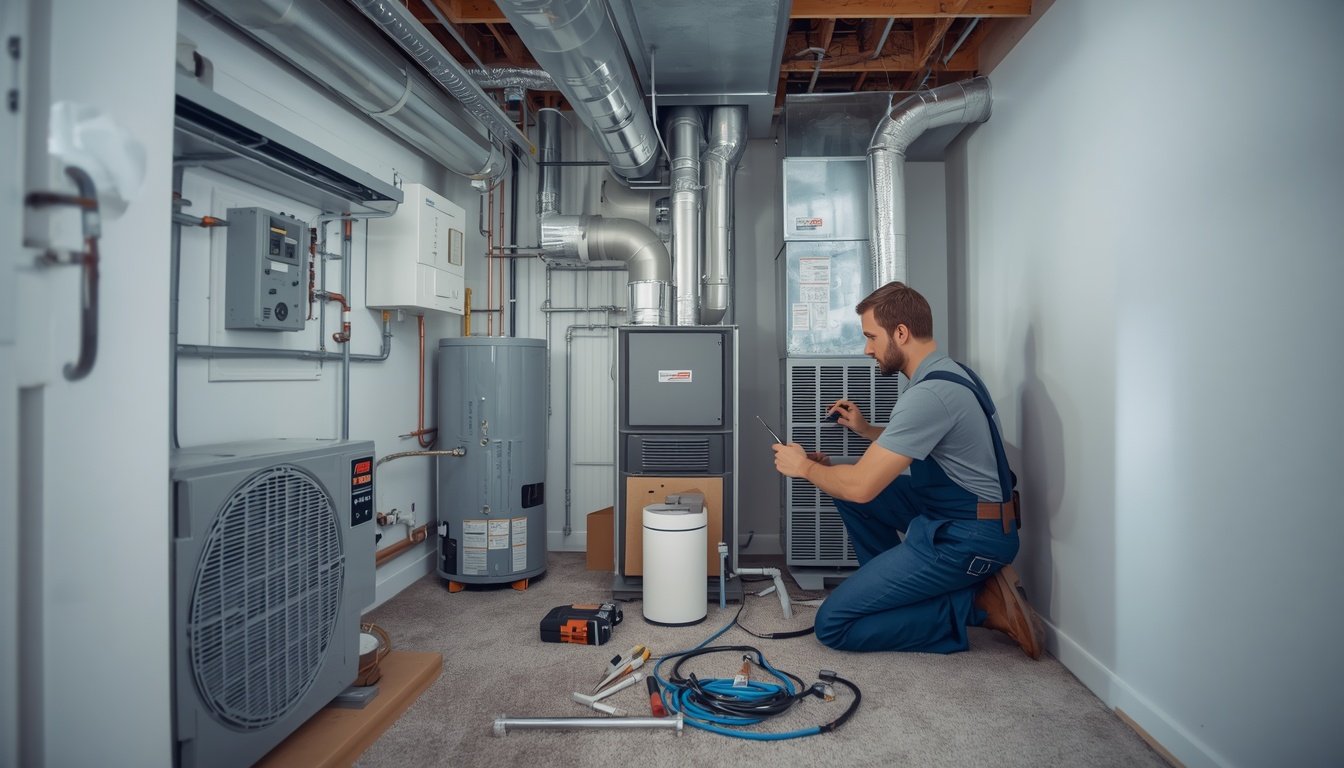
Installing larger home climate systems is a project that usually involves more than buying equipment and placing it in the home. Whole-home systems may require sizing, ductwork, electrical work, gas connections, drainage, venting, permits, controls, and professional setup. The goal is to make the system fit the house safely and effectively, whether the project involves a mini split, gas unit heater, whole-house humidifier, dehumidifier, ERV, HRV, filtration system, or a larger HVAC upgrade.
This matters because installation quality can affect comfort, safety, running cost, maintenance, and long-term reliability. A good product can perform poorly if it is sized incorrectly, installed in the wrong location, connected badly, or not matched to the home’s layout. If you are preparing for a contractor visit, the article on what to expect during professional HVAC installation is a useful starting point.
What This Guide Covers
This guide explains the main installation issues behind whole-home climate systems. It covers how installation planning works, why different systems need different requirements, what homeowners should check before choosing equipment, and how to think about cost beyond the product price.
The most important point is that whole-home climate systems are not all installed the same way. A ductless mini split may need an outdoor condenser, indoor wall unit, refrigerant lines, condensate drainage, and electrical work. A gas unit heater may need fuel supply, venting, mounting, and safety clearances. A whole-house dehumidifier may need ducting, drainage, and service access. An ERV or HRV may need intake ducts, exhaust ducts, balancing, and controls.
This guide is designed to help you understand those differences before choosing a product or hiring an installer. It is not about doing the work yourself. It is about knowing what questions to ask, what installation details matter, and why the full project cost can be much higher than the equipment alone.
How Whole-Home Climate System Installation Works
Installation usually starts with the problem the system is supposed to solve. A contractor or homeowner needs to identify whether the issue is heating, cooling, humidity, ventilation, filtration, zoning, or a specific problem area. From there, the system must be matched to the home’s size, layout, insulation, climate, existing equipment, and available installation locations.
For mini splits, installation planning often includes indoor unit placement, outdoor condenser location, line-set routing, drainage, electrical capacity, and whether the system is single-zone or multi-zone. The guide on mini split installation cost explains why the full project includes more than the indoor and outdoor units.
For large-space heaters, installation is often more focused on fuel type, mounting location, clearances, venting, thermostat placement, and whether the building can safely support the heater. A garage or workshop heater may also need gas line work, electrical connection, and code-compliant venting. The article on garage heater installation cost is useful when comparing product cost with total installed cost.
For humidity, ventilation, and filtration systems, installation often depends on mechanical room layout, duct access, drainage, controls, and service space. These systems may not be visible in the living area, but the installation details can still affect performance and maintenance.
Common Use Cases
One common use case is installing a mini split for a room, addition, home office, finished basement, or multi-room ductless setup. These projects are popular where existing ductwork does not reach the space well or where separate zone control is needed. A single-zone system may be relatively simple compared with a multi-zone setup, but both still need careful placement and correct sizing.
Another use case is heating a large garage, workshop, or pole barn. These spaces often need more output than a normal room heater can provide. Installation may involve gas supply, vent routing, ceiling mounting, clearances, and airflow planning. If the heater is not placed correctly, warm air may not reach the work area effectively.
Whole-house humidity systems are another major installation category. A dehumidifier may need a drain line, duct connection, filter access, and a suitable mechanical space. A steam humidifier may need water, electrical, controls, and access for maintenance. In both cases, the system must be installed in a way that allows it to work with the home rather than against it.
Ventilation systems such as ERVs and HRVs can be even more installation-sensitive. They need proper intake and exhaust locations, duct routing, airflow balancing, and maintenance access. The article on ERV and HRV installation requirements explains why ventilation equipment should be treated as a system, not a simple appliance.
Key Factors to Consider
- System sizing, because equipment that is too small may struggle while equipment that is too large may cost more, cycle poorly, or create comfort issues.
- Installation location, including indoor placement, outdoor equipment clearance, mechanical room access, duct routing, drainage, and service space.
- Electrical, gas, water, venting, and drainage requirements, because many whole-home systems need more than a standard outlet or simple wall mount.
- Permits and code requirements, especially for gas heaters, major HVAC upgrades, electrical work, ventilation systems, and installed whole-house equipment.
- Compatibility with existing HVAC equipment, ductwork, thermostats, controls, filter cabinets, fuel lines, and available space.
- Long-term maintenance access, because filters, coils, drains, ventilation cores, humidifier canisters, and service panels must remain reachable.
- Total installed cost, including labor, materials, electrical work, controls, ductwork, permits, venting, mounting, and any changes needed to the home.
Choosing the Right Option
The right option starts with matching the system to the problem, not just choosing the biggest or most expensive product. If one room is uncomfortable, a single-zone mini split may be enough. If several rooms need independent control, a multi-zone system may be more appropriate. If a large garage needs heat, a high-output gas heater may make more sense than a small electric heater. If the issue is stale air, ventilation may be more relevant than heating or cooling equipment.
Before choosing equipment, it is worth thinking through the full installation path. Where will the unit go? How will power, fuel, water, drains, or ducts reach it? Can it be serviced later? Will the installation meet clearance requirements? Will the system work with the existing HVAC setup? These questions can prevent buying equipment that looks right online but becomes difficult or expensive to install.
It is also important to compare quotes carefully. Two installation quotes may include different levels of work, different assumptions, different equipment, or different permit handling. The article on questions to ask an HVAC installer before hiring can help you check what is included before approving the project.
For larger upgrade planning, cost should be viewed by system type and home size. The guide on HVAC cost breakdown by system type and square footage can help you compare different project categories more realistically.
Limitations and Considerations
Installation cannot fix every underlying home problem. If a home has poor insulation, major air leaks, bad ductwork, water intrusion, or poor drainage, new equipment may only cover up part of the issue. A powerful heater may still struggle in a drafty garage. A dehumidifier may reduce moisture in the air but will not fix a leaking foundation. A ventilation system may bring in fresh air but will not remove every indoor pollutant by itself.
There is also a risk in choosing equipment before understanding the home. A mini split may be a poor fit if the indoor unit cannot be placed where airflow will reach the space. A gas heater may be impractical if venting is difficult. An ERV or HRV may be expensive to install if duct routes are limited. A whole-house humidifier may create condensation if installed or controlled poorly.
Professional installation is often worth considering for higher-value systems because safety, performance, and code compliance matter. This is especially true for gas equipment, high-capacity mini splits, whole-house ventilation, steam humidifiers, and systems that connect to existing HVAC ductwork. The goal is not just to install the equipment, but to make sure the finished system fits the home and can be maintained over time.