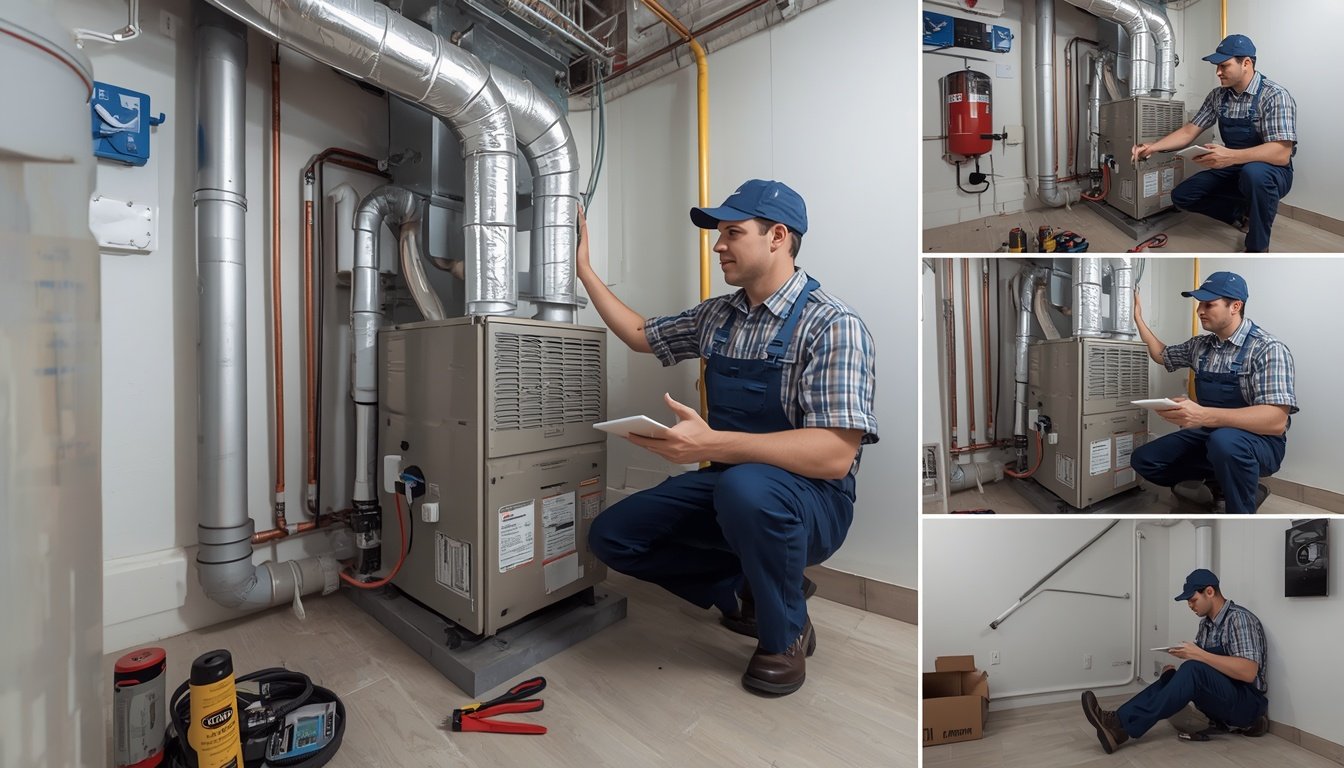
Maintaining and troubleshooting home climate systems means keeping heating, cooling, humidity, ventilation, and filtration equipment clean, safe, and working as intended. A whole-home system can include central HVAC equipment, ductless mini splits, garage heaters, humidifiers, dehumidifiers, ERVs, HRVs, filters, thermostats, drains, vents, and controls. The goal is to catch small issues early, understand warning signs, and know when a problem needs professional service rather than simple homeowner maintenance.
This matters because climate systems usually fail gradually before they fail completely. Weak airflow, unusual noise, short cycling, poor humidity control, dirty filters, clogged drains, stale air, or rising energy use can all point to an underlying issue. A regular maintenance routine can reduce avoidable problems, while basic troubleshooting can help you decide whether the issue is simple, seasonal, or serious enough to call a technician.
What This Guide Covers
This guide explains how HVAC maintenance and troubleshooting fits into a whole-home climate control plan. It covers routine maintenance, common warning signs, system-specific issues, and the difference between basic checks and problems that need professional diagnosis.
The main point is that maintenance is not only about the furnace or air conditioner. A complete home climate system may include mini splits, whole-house dehumidifiers, steam humidifiers, media air cleaners, ERV or HRV ventilation equipment, gas garage heaters, smart thermostats, and ductwork. Each part has its own maintenance needs, but many problems show up in similar ways: poor airflow, weak comfort, unusual sound, water where it should not be, or equipment that runs differently than normal.
For a broad seasonal approach, the seasonal HVAC maintenance checklist is a useful companion to this guide. It helps organize the basic tasks that should be reviewed before heavy heating or cooling seasons begin.
How HVAC Maintenance and Troubleshooting Works
Maintenance works by keeping the system clean, accessible, correctly adjusted, and able to move air or moisture properly. Filters need to be replaced. Drains need to stay clear. Outdoor units need airflow. Indoor units need clean coils and filters. Humidifiers and dehumidifiers need service access. Ventilation systems need filter and core checks. Gas heaters need safe venting and proper operation.
Troubleshooting works by identifying what changed. If a system used to heat or cool properly and now does not, the first step is to look for simple causes: thermostat settings, dirty filters, blocked vents, tripped breakers, closed dampers, clogged drains, or outdoor equipment blocked by debris. If those simple checks do not explain the issue, the problem may involve refrigerant, electrical parts, motors, sensors, burners, duct leakage, condensate drainage, or system controls.
Mini splits have their own troubleshooting pattern because they rely on indoor wall units, outdoor condensers, refrigerant lines, filters, fans, and condensate drains. If a ductless system is not cooling, heating, or draining properly, the guide to troubleshooting common mini split problems is a more focused resource.
Common Use Cases
One common use case is seasonal preparation. Before summer, cooling systems need clean filters, open vents, clear outdoor coils, and working condensate drainage. Before winter, heating systems need safe operation, clear airflow, and attention to burners, vents, thermostats, and controls. Homes with gas heaters, steam humidifiers, or ventilation systems may need extra inspection before colder weather.
Another use case is diagnosing uneven comfort. If one room is too hot, too cold, damp, dry, or stale, the issue may not be the main equipment alone. It may involve airflow, duct balance, mini split placement, humidity control, insulation, ventilation, or thermostat location. Maintenance helps remove obvious causes before assuming the system needs replacement.
Whole-home humidity systems also need ongoing attention. A whole-house dehumidifier may need filter cleaning, drain checks, and service access. A humidifier may need canister replacement, water supply checks, and seasonal adjustment. If your home uses installed moisture control equipment, the article on how to maintain a whole-house dehumidifier can help with that specific side of the system.
Ventilation systems are another important use case. ERVs and HRVs can lose performance if filters clog, cores become dirty, drains fail, or airflow becomes unbalanced. If a home starts to feel stale or the ventilation system sounds different, the guide on signs your ERV or HRV needs servicing is worth checking.
Key Factors to Consider
- Airflow, because dirty filters, blocked vents, clogged coils, closed dampers, and restricted ducts can affect heating, cooling, filtration, and humidity control.
- Water management, because condensate drains, dehumidifier drains, humidifier water lines, and leaks can create damage if they are ignored.
- System age, because older equipment may need more frequent service and may eventually become less practical to repair.
- Safety, especially for gas heaters, combustion equipment, venting, electrical components, and systems installed in garages or mechanical rooms.
- Maintenance access, because equipment that is hard to reach is more likely to be neglected over time.
- Seasonal load, because problems often appear when equipment is under heavy demand during hot, cold, humid, or dry weather.
- Pattern of symptoms, because repeated problems usually matter more than a single temporary performance change.
Choosing the Right Option
The right response depends on the severity of the problem. Some issues are simple homeowner checks. A dirty filter, blocked return vent, wrong thermostat mode, full drain pan, or outdoor unit covered in debris may be easy to identify. Other problems require professional diagnosis, especially when they involve refrigerant, gas burners, electrical parts, motors, control boards, pressure switches, or repeated shutdowns.
It helps to separate maintenance from repair. Maintenance is preventive work that keeps the system in good condition. Repair is needed when something has already failed or is no longer operating correctly. Troubleshooting sits between the two. It helps you decide whether the problem is obvious, whether it is safe to keep using the system, and whether a technician should inspect it.
If a system is older, expensive to repair, or repeatedly unreliable, the decision may become service versus replacement. A minor repair on a relatively new system may make sense. A major repair on aging equipment may not. The article on when to service vs replace an aging climate control system can help frame that decision more clearly.
For mini splits, the right maintenance option often starts with the indoor unit. Filters should be cleaned, airflow should be checked, and condensate drainage should be watched. The mini split cleaning and filter replacement guide gives more detail for that equipment type.
Limitations and Considerations
Basic troubleshooting has limits. A homeowner can check filters, vents, thermostat settings, power, outdoor clearance, and obvious drainage issues. But deeper diagnosis may require tools, training, and safety knowledge. Electrical faults, refrigerant problems, gas combustion issues, cracked heat exchangers, pressure problems, and control failures should not be guessed at.
Maintenance also cannot fix every underlying problem. A clean HVAC system may still struggle if the home has poor insulation, major air leaks, bad ductwork, water intrusion, or equipment that was sized incorrectly from the start. A dehumidifier may reduce dampness, but it will not fix a foundation leak. A heater may warm a garage, but it will still lose heat quickly if the space is uninsulated.
Another limitation is that different systems need different maintenance schedules. A filter may need attention monthly in one home and less often in another. A humidifier may need seasonal service. A dehumidifier may need regular drain checks. A gas garage heater should be inspected with safety in mind. A ventilation system may need filter, core, and airflow checks. The best maintenance routine is the one that matches the equipment actually installed in the home.