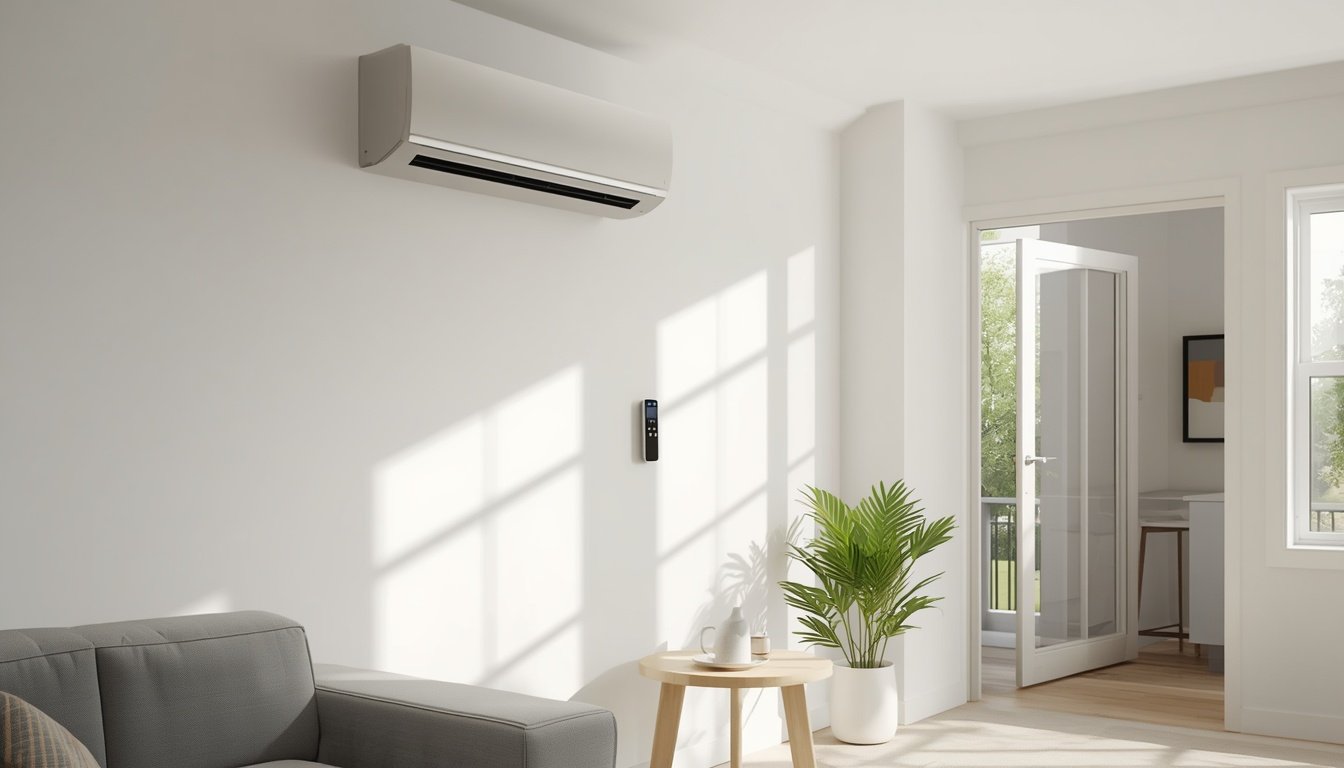
Mini split systems are ductless heating and cooling systems that use an outdoor condenser and one or more indoor air handlers to condition specific rooms or zones. They are often used when a home needs better comfort in certain areas without adding full ductwork or replacing the entire central HVAC system. For whole-home climate control, the main decision is whether a single-zone, multi-zone, premium, or cold-climate mini split setup matches the size, layout, and heating needs of the home.
These systems can be a strong option for additions, finished basements, home offices, bedrooms, garage conversions, and homes where existing ductwork does not serve every area evenly. They can also be used as part of a larger whole-home strategy, especially when several rooms need independent temperature control. If you are comparing ductless options for an entire home, the article on best mini split system for whole-home heating and cooling is a useful next step.
What This Guide Covers
This guide explains how mini splits fit into a whole-home climate control plan. It covers how they work, where they are most useful, what affects sizing and installation, and when they make more sense than central air, portable appliances, or other heating and cooling systems.
The main thing to understand is that a mini split is not just a small air conditioner. Many systems are heat pumps, which means they can provide both cooling and heating when the model, climate, and installation are suitable. Some are designed for one room, while others are designed for several zones. A single-zone system may solve one major comfort problem, while a multi-zone system may support several rooms from one outdoor unit.
This guide also helps separate practical buying decisions from broad marketing claims. A mini split can be efficient and flexible, but it still has limits. Room size, insulation, climate, line-set routing, indoor unit placement, electrical requirements, and installer skill all affect the final result.
How Mini Split Heating and Cooling Works
A mini split system uses an outdoor unit connected to one or more indoor units. The indoor unit delivers conditioned air directly into the room or zone, while the outdoor unit handles heat exchange. Because the system does not require traditional ducts, it can be installed in many places where extending ductwork would be difficult, expensive, or impractical.
Single-zone systems use one outdoor unit and one indoor unit. They are best when one room or area needs dedicated heating and cooling. Multi-zone systems use one outdoor unit connected to several indoor units. These are better suited to homes where several rooms need independent comfort control. If you are unsure which layout is right, the comparison of single-zone vs multi-zone mini split systems explains the difference more directly.
Mini split heat pumps can move heat into or out of a space rather than creating heat the same way a resistance heater does. In cooling mode, they remove heat from indoors. In heating mode, they draw heat from outdoor air and move it inside. This is why climate matters. A heat pump that works well in mild winter weather may not be enough as the only heat source in every cold-climate home.
Common Use Cases
Mini splits are commonly used in rooms that do not stay comfortable with the main HVAC system. This might include a bedroom over a garage, a sunroom, a finished attic, a basement, a detached workspace, or a home office with extra heat from computers and equipment. They are also used in additions where extending ductwork would be costly or disruptive.
For whole-home planning, mini splits become more important when multiple areas need separate control. A multi-zone system can give different rooms their own indoor units, which may be useful in homes with closed-off bedrooms, mixed-use spaces, or temperature differences between floors. The guide on how many rooms a mini split can cool is helpful when thinking about the limits of one system.
Cold-climate use is another common question. Some buyers want a mini split not just for cooling, but also for winter heating. In that case, model selection, outdoor temperature performance, insulation, and backup heat planning all matter. The article on whether mini splits are good in cold climates gives more detail on that specific use case.
Key Factors to Consider
- Number of zones, because one room may only need a single-zone system while several rooms may require a multi-zone setup.
- Correct sizing, because a system that is too small may struggle while a system that is too large may not run as comfortably or efficiently.
- Climate and heating expectations, especially if the mini split will be used as a major winter heating source.
- Installation location, including wall placement, outdoor condenser location, drainage, line-set routing, and service access.
- Electrical requirements, because mini splits usually need dedicated electrical work rather than a standard plug-in outlet.
- Home layout, because open-plan areas behave differently from homes with hallways, closed bedrooms, and multiple floors.
- Long-term maintenance, including filter cleaning, coil care, condensate drainage, and professional servicing when needed.
Choosing the Right Option
The right mini split choice starts with the problem you are trying to solve. If one room is too hot or too cold, a premium single-zone system may be the cleanest solution. If several rooms need comfort control, a multi-zone system may make more sense. If the home is in a colder region, the system needs to be chosen with heating performance in mind, not just cooling capacity.
For a closer look at the specs, installation requirements, and buyer fit, read our Senville 36000 BTU Quad Zone Mini Split review.
Sizing is one of the most important decisions. Buyers often focus on product names or price, but the system must match the space. Room size, ceiling height, insulation, window exposure, climate, and usage all affect the right capacity. The article on what size mini split you need is a good place to start before comparing specific products.
Cost should also be judged as a full installed project, not just the product price. A mini split may involve equipment, mounting, refrigerant lines, electrical work, condensate drainage, permits, and labor. Multi-zone systems usually add more planning and installation complexity. For budget planning, the guide on mini split installation cost explains the cost side more clearly.
For buyers comparing broader whole-home systems, it can also help to look at alternatives. Central air may be better in some ducted homes, while ductless systems may be better for additions, retrofits, or homes without suitable ductwork. The comparison of mini split vs central air can help clarify that decision.
For a closer look at the cold-climate specs, installation requirements, and buyer fit, read our Senville AURA Series Mini Split review.
Limitations and Considerations
Mini splits are flexible, but they are not the right solution for every home. A single indoor unit may not heat or cool several closed-off rooms effectively. A multi-zone system can handle more areas, but it also needs more careful planning. Indoor units must be placed where airflow can reach the areas that matter, and outdoor equipment needs proper clearance and service access.
Installation quality is also critical. Poor line-set routing, bad drainage, incorrect sizing, weak mounting, or electrical shortcuts can reduce performance and create problems later. A DIY-friendly product may still require skills, tools, and code awareness that not every homeowner has. For most higher-value systems, professional installation is worth considering, especially when the system will become part of the home’s long-term climate control setup.
Cold-weather use needs realistic expectations. Some mini split heat pumps can perform well in lower temperatures, but performance still depends on the specific model and conditions. In very cold climates, backup heat may still be needed. A mini split should be selected as part of a complete heating plan, not as a guess based only on the product title.