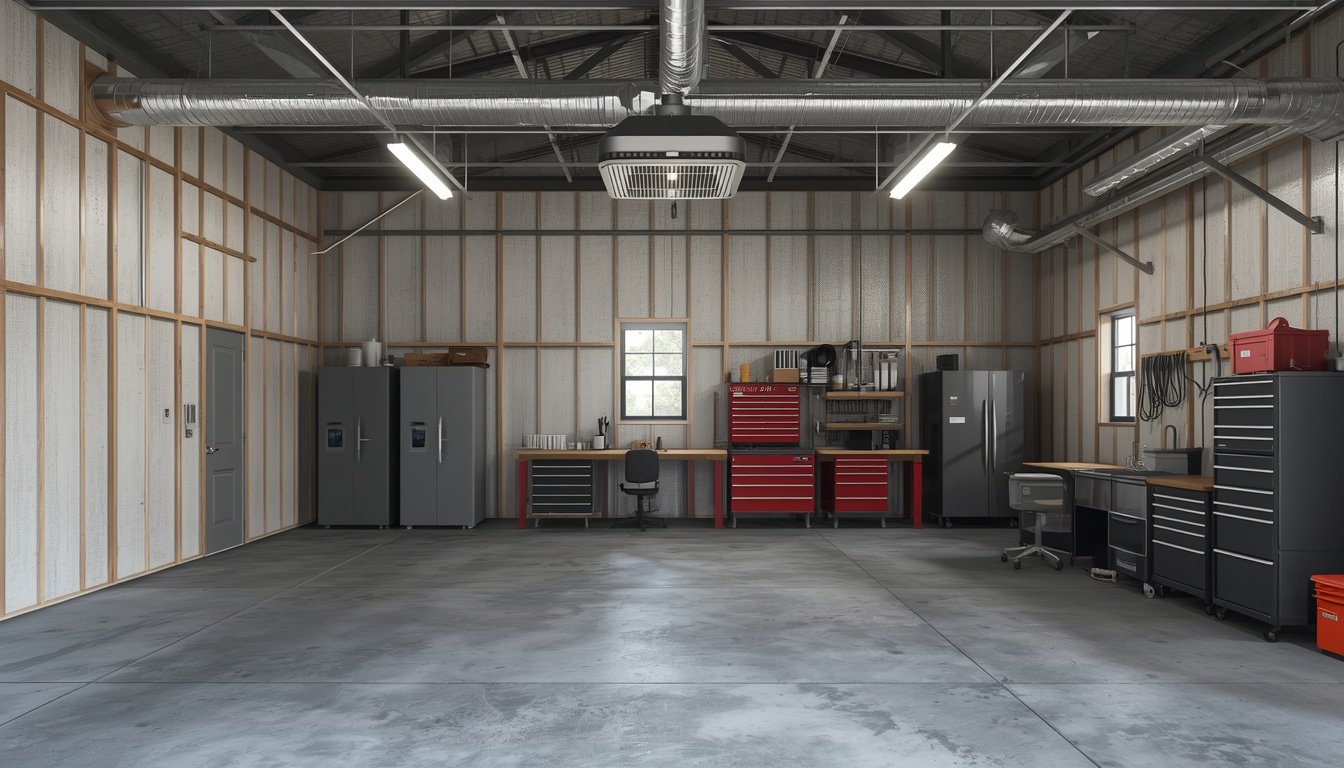
Large-space heating is the process of warming garages, workshops, pole barns, commercial bays, and other open or hard-to-heat areas that are too large for normal room heaters. These spaces often need higher-output equipment because they may have high ceilings, concrete floors, large doors, poor insulation, or frequent air loss. The right system depends on the size of the space, fuel access, insulation quality, ceiling height, ventilation needs, and how often the area is used in cold weather.
For whole-home climate control, large-space heating matters because garages, workshops, detached buildings, and work bays often sit outside the comfort range of the main house. A small portable heater may be useful for short-term spot heating, but it may not be enough for a large garage or pole barn used regularly in winter. If you are comparing installed options, the guide to the best gas unit heater for large garages is a useful starting point.
What This Guide Covers
This guide explains how large-space heating systems work, where they are most useful, and what to consider before choosing equipment. It focuses on practical heating decisions for garages, workshops, pole barns, detached workspaces, and larger utility areas rather than small bedrooms or standard living rooms.
The main challenge with large spaces is that heating demand can change quickly. A garage door opening for a few minutes can release a large amount of warm air. A tall ceiling can trap heat above the work area. Concrete floors can feel cold even when the air temperature improves. Metal buildings and older workshops can lose heat quickly if they are not insulated well. These factors make large-space heating different from ordinary indoor heating.
This guide also helps explain why product size, fuel type, installation, venting, and airflow matter. A high-output heater may be useful in the right building, but it can be oversized, unsafe, or inefficient if it does not match the space. For sizing questions, the article on what size heater you need for a large garage gives more focused guidance.
How Large-Space Heating Works
Large-space heating systems work by delivering enough heat to overcome the heat loss of a bigger, harder-to-condition area. In many cases, this means using an installed unit heater mounted near the ceiling or wall. Gas unit heaters are common in large garages and workshops because they can provide higher output than many small electric heaters. Electric heaters may still work in smaller spaces, but larger electric systems can require significant electrical capacity.
A gas unit heater typically burns natural gas or propane and uses a fan to move warm air through the space. Because combustion is involved, safe installation, clearances, and venting are important. The heater must be placed where air can circulate, where the unit can be serviced, and where venting can be routed properly. If you are comparing fuel options, the article on propane vs natural gas garage heaters explains the main differences.
Heating performance also depends on how the space holds heat. Insulation, air sealing, door quality, ceiling height, floor temperature, and outside weather all matter. A powerful heater in an uninsulated building may run often and still struggle to create stable comfort. A better-insulated garage may need less output and recover faster after doors are opened.
Common Use Cases
Large-space heating is commonly used in garages where people work on cars, tools, storage, hobbies, or equipment during winter. It is also used in detached workshops, pole barns, farm buildings, commercial bays, and utility areas where people need a usable working temperature rather than full living-room comfort.
Some buyers need occasional heat for short work sessions. Others need a dependable heating system because the space is used daily. That difference matters. A garage used for one hour on weekends may not justify the same system as a workshop used every day through winter. A large pole barn with high ceilings, exposed walls, and frequent door openings may need more serious heating than an attached two-car garage.
Large-space heating can also be part of a broader home improvement plan. A garage conversion, home workshop, or heated outbuilding may need both temperature control and safety planning. Before choosing a system, it is worth comparing output levels, installation requirements, and fuel availability. The article on 45,000 vs 75,000 BTU garage heaters can help explain why different output levels suit different spaces.
Key Factors to Consider
- Space size, ceiling height, insulation level, door size, and whether the building is attached, detached, finished, or unfinished.
- Fuel availability, including whether natural gas, propane, or sufficient electrical capacity is available at the installation location.
- Installation requirements, including mounting location, venting route, clearances, electrical connection, thermostat placement, and service access.
- Use pattern, because occasional spot heating is different from daily winter workshop use or all-day work bay heating.
- Air movement, because tall ceilings and open layouts may need good fan placement or circulation to keep warmth near the work area.
- Safety requirements, especially for gas heaters, combustible storage, vehicle areas, ventilation, and local code compliance.
- Total cost, including not only the heater but also fuel line work, venting, mounting hardware, electrical work, permits, and installation labor.
Choosing the Right Option
The right heating system starts with the size and use of the space. If the area is a large garage, detached workshop, or pole barn used regularly in cold weather, a high-output gas unit heater may be the most practical direction. If the space is smaller, well insulated, and used only occasionally, a smaller heater or simpler setup may be enough.
Fuel type is one of the biggest decisions. Natural gas can make sense when a reliable gas supply is already available. Propane can be useful in detached spaces or rural buildings where natural gas is not available. Electric heat may be simpler in some garages, but high-output electric heating can require dedicated circuits or upgraded electrical service. The comparison of gas garage heater vs electric garage heater can help clarify which direction fits your situation.
Installation should also be considered before buying the equipment. A ceiling-mounted unit heater needs enough clearance, a suitable mounting point, safe venting, and airflow that reaches the work area. The best heater on paper can still perform poorly if it is installed in the wrong location or sized without considering insulation and ceiling height. The guide to garage heater installation cost can help you think about the full project rather than just the product price.
For a closer look at the output, venting requirements, installation considerations, and buyer fit, read our Mr. Heater MHU125NG 125K BTU Unit Heater review.
Limitations and Considerations
Large-space heaters can make garages and workshops much more usable, but they cannot overcome every building problem efficiently. If a garage has uninsulated walls, major air leaks, an old door, or a cold concrete slab, heat loss may remain high. In that situation, insulation and air sealing may be just as important as the heater itself.
Gas heaters also require more safety planning than basic portable appliances. Venting, combustion air, clearances, gas connections, and local code requirements should not be treated casually. The article on whether garage unit heaters need venting is especially important before choosing a gas unit heater.
Oversizing is another risk. A heater that is much larger than needed may heat the space quickly but cycle poorly, feel uneven, or cost more than necessary to install. Undersizing is also a problem because the heater may run constantly and never make the space comfortable. The best result usually comes from matching the heater to the building, climate, fuel type, and actual use pattern.