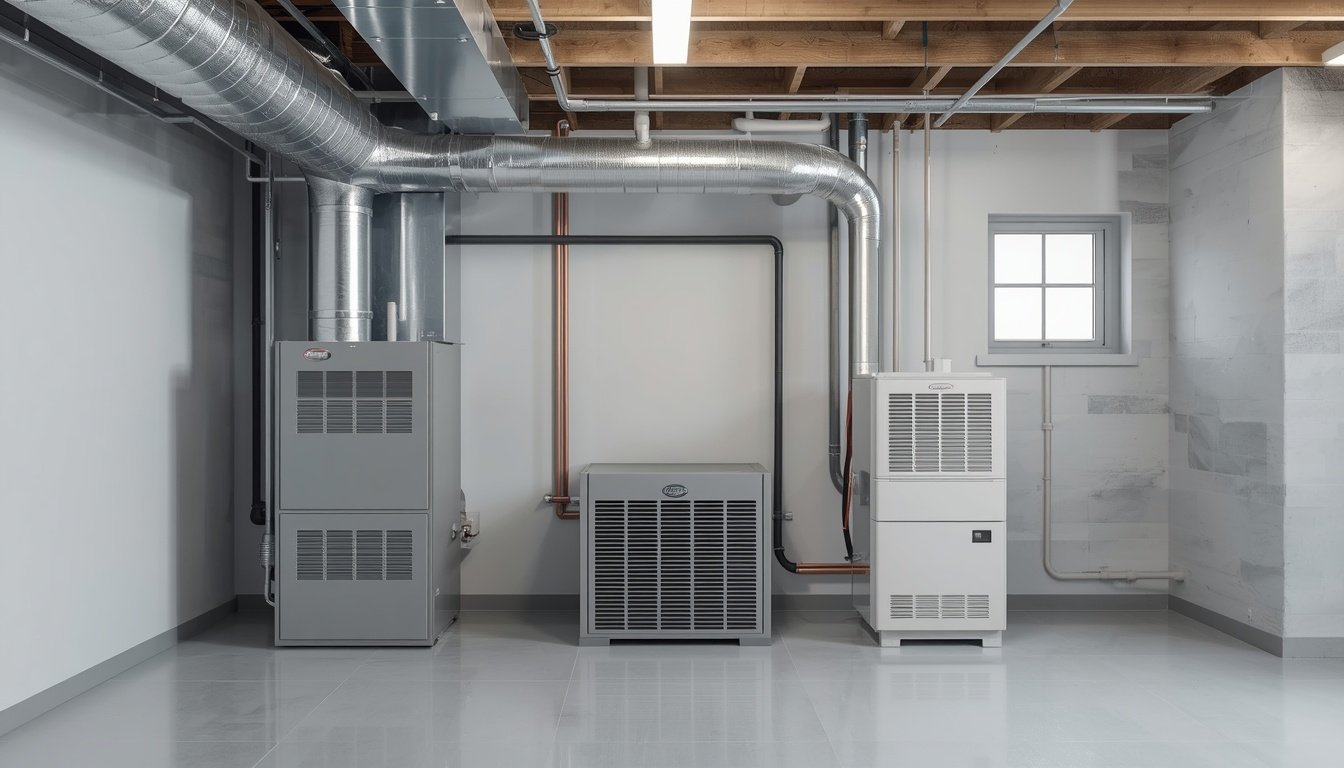
Yes, a whole-home dehumidifier can help with mold problems by keeping your home’s humidity below the level where mold can grow. Most mold issues start when indoor humidity consistently exceeds 60%. A whole-home system manages moisture in every room, creating an environment where mold struggles to survive. If you have concerns about mold, using a dehumidifier can reduce the risk and stop new growth before it starts.
How Dehumidification Controls Mold Growth
Mold thrives when there’s excess moisture in your home’s air. It only needs a few days of elevated humidity to begin growing. Whole-house dehumidifiers keep humidity consistently low, which directly impacts mold by cutting off its main requirement—moisture. If you maintain indoor humidity between 30% and 50%, mold cannot easily take hold.
This type of system works continuously, treating the entire living space. Unlike portable dehumidifiers, which only affect a single room, a whole-home unit is integrated with your HVAC ductwork and thermostat. This means areas like basements, crawlspaces, and closets also benefit.
By automatically monitoring and adjusting the moisture in your entire house, these systems respond to daily and seasonal changes. Consistent dehumidification also helps stop hidden mold, which often forms in wall cavities or under flooring. With less moisture available, mold loses its ability to grow and spread.
Benefits Beyond Mold Prevention
Installing a whole-home dehumidifier brings more advantages than just protecting against mold. Lowering humidity reduces the musty odors commonly associated with mold presence. Air feels fresher and more comfortable, especially during humid months.
Humidity control also helps balance temperatures, making your AC run more efficiently. When air isn’t so damp, your cooling system doesn’t have to work as hard, cutting energy costs and prolonging its lifespan. Lower humidity is also beneficial for allergy sufferers, as dust mites and bacteria struggle to survive in drier conditions.
- Reduces allergens and dust mites
- Helps protect furniture and wood from moisture damage
- Decreases musty smells in basements and closets
- Improves overall comfort in every room
By addressing high indoor humidity, you’re not just preventing mold but also creating a healthier home. It’s a proactive step for air quality and comfort. Many homeowners report fewer allergy symptoms and notice that electronics, books, and musical instruments also last longer when protected from excess moisture.
Considerations When Choosing a Dehumidifier
Before you invest, it’s important to choose the right-sized system for your home. The size and capacity should match the square footage and potential moisture sources. An undersized unit may not keep humidity low enough, while an oversized one may cycle on and off too often, wasting energy.
Think about your home’s layout as well. Open floor plans tend to have more even humidity, but closed-off rooms or multiple stories might need extra consideration. For guidance, you can check resources like the whole-house dehumidifier buying guide to make an informed choice.
Also, consider installation and maintenance. Whole-house systems typically require professional setup and occasional filter changes. Make sure you’re ready for this commitment, as ongoing upkeep ensures reliable performance. Lastly, look for energy-efficient models with user-friendly controls and smart-home compatibility for better long-term results.