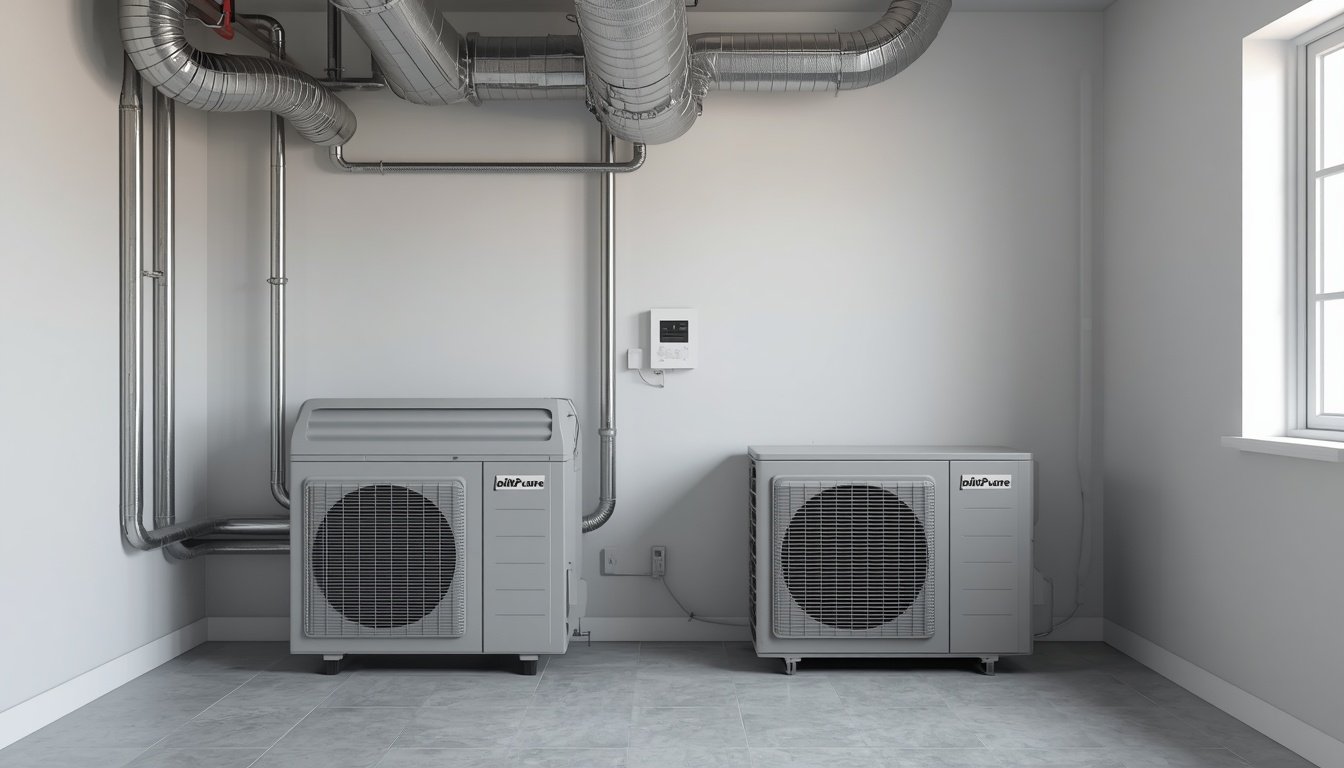
Whole-house dehumidifiers are designed to remove excess moisture from the air across an entire home, and they are effective at controlling humidity levels when installed and sized appropriately. These systems work by drawing humid air from throughout the house, extracting water, and releasing drier air back into the living space. They reliably reduce indoor humidity, helping maintain comfort and prevent moisture-related issues.
How It Works
A whole-house dehumidifier connects directly to a home’s HVAC system or ductwork. It pulls air through coils that cool the air, causing moisture to condense and collect in a drain pan. The dehumidified air is then reheated and delivered back into the house.
Integrated sensors monitor the home’s humidity and activate the system as needed. Water collected during this process is drained directly to the outside or into a plumbing fixture, so there is no need to empty a tank.
What It Can Do
These systems are capable of maintaining consistent humidity levels and improving overall indoor air quality. They are designed for ongoing, automatic operation and can cover large spaces more efficiently than portable units.
- Lower overall indoor humidity to target levels set on the control panel.
- Help reduce mold growth and limit dust mite activity by keeping relative humidity below 60%.
- Integrate with central HVAC systems for whole-home coverage and seamless operation.
- Improve comfort by reducing the sticky feeling associated with high humidity.
Along with these benefits, homes with proper humidity control often experience fewer musty odors and less visible mildew on surfaces. Consistent humidity management can also help preserve wood floors, furnishings, and electronics from moisture damage. When considering the most suitable option, comparing features and capacities for the best whole-house dehumidifier may be helpful.
Limitations and What It Cannot Do
While whole-house dehumidifiers are effective, they are not a universal solution for all moisture or air quality issues. Performance depends on proper sizing, installation, and operating conditions.
- Cannot remove moisture from active water leaks, flooding, or structural water damage.
- May not keep up in homes with extreme humidity sources, such as indoor pools or unvented damp basements.
- Do not filter allergens, particulates, or odors unless combined with separate air filtration systems.
- Require regular maintenance, including coil cleaning and drain inspection, to operate efficiently.
If the unit is too small for the space or not integrated with the HVAC system correctly, it may underperform or fail to reach target humidity levels. These systems are not designed for cold environments below 55°F, as condensation may freeze. Whole-house dehumidifiers also do not address the root causes of excess moisture, such as poor drainage or inadequate vapor barriers. It is important for homeowners to address any underlying structural or ventilation issues to achieve the most reliable results.
When It Works Best
Whole-house dehumidifiers are most effective in enclosed, climate-controlled homes that experience consistent humidity problems—such as sticky summers, musty smells, or visible condensation. They work optimally when the home’s windows and doors are kept closed, and when other sources of moisture are minimized.
Homes located in humid climates or regions with high seasonal rainfall are strong candidates. Proper sizing and professional installation further ensure even coverage and balanced airflow. Using the system year-round is particularly helpful in areas with persistent moisture, while others may use it seasonally, depending on weather and indoor activities.
Common Misconceptions
Some people believe these systems work like air conditioners, but dehumidifiers do not cool the air—they only reduce humidity. Others assume one unit fits all homes, but selecting the correct capacity is crucial for effective operation. Whole-house dehumidifiers also do not eliminate all sources of air contamination or substitute for proper ventilation and maintenance.
Final Answer Summary
Whole-house dehumidifiers are proven to work well for controlling indoor humidity across an entire home. Their effectiveness depends on appropriate sizing, correct installation, and realistic expectations about their capabilities and limitations. They are a practical solution for managing moisture but are not a universal fix for every humidity or air quality concern.