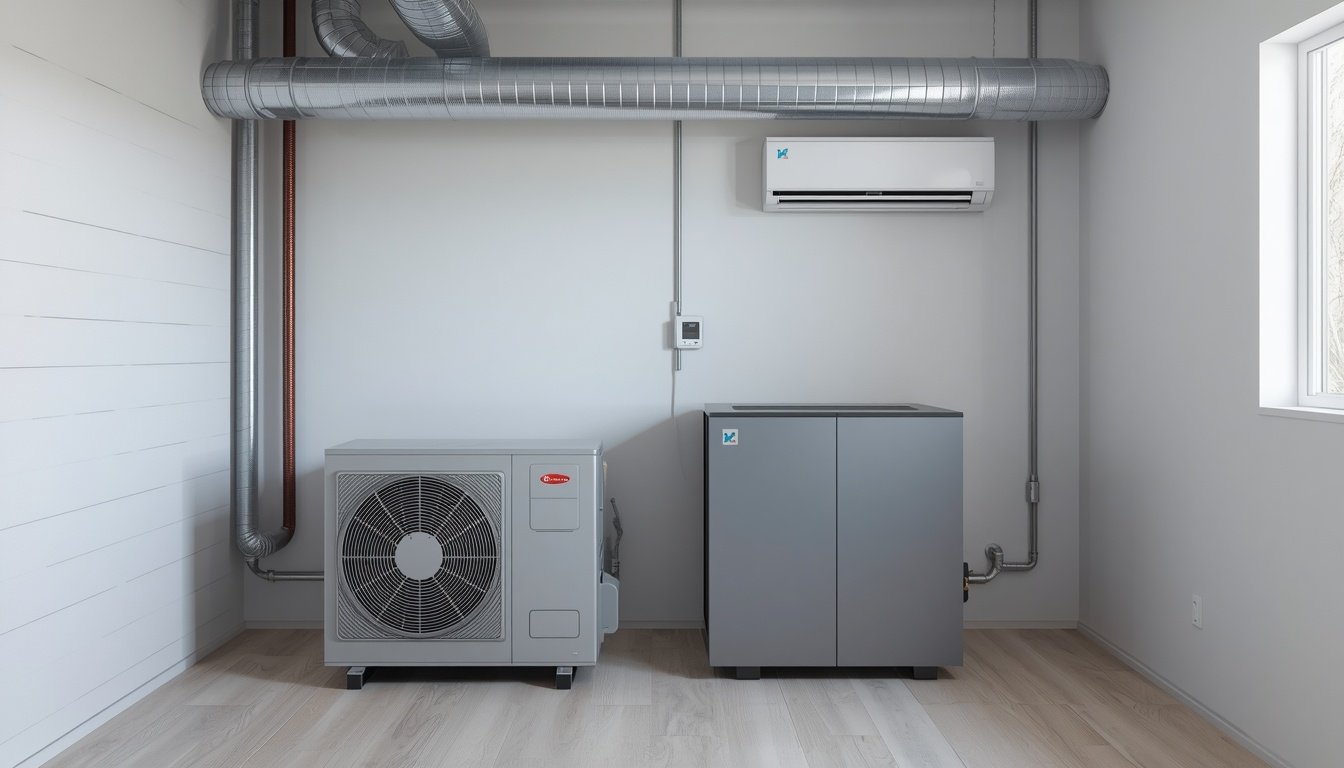
A climate control product is considered “heavy duty” when it is specifically engineered to handle larger volumes of air, greater temperature fluctuations, and continuous, demanding operation. These systems are typically distinguished by their higher capacity, robust components, and ability to serve large spaces or buildings with complex needs. Heavy-duty climate control is not just about size—it also involves enhanced durability and reliability under sustained or extreme workloads.
How It Works
Heavy-duty climate control products operate through increased power, advanced engineering, and the use of commercial-grade materials. These systems often include larger compressors, more substantial motors, and precision controls designed for long-term use. They integrate sensors and automation to regulate indoor environment parameters such as temperature, humidity, and air quality across extensive or multiple zones.
Such products may also feature redundancy (back-up systems) and enhanced filtration. Their core mechanisms rely on circulating conditioned air efficiently, extracting excess humidity, and responding quickly to thermal changes. The performance is measured in units like BTU (British Thermal Units) or tons, indicating heating and cooling capacity well above standard residential models.
What It Can Do
With their specialized construction, heavy-duty climate control systems offer functionality suited to demanding scenarios. Applications range from commercial buildings and industrial spaces to large homes with unique environmental requirements. They provide advantages in operational strength and environmental stability.
- Control temperatures effectively in large or multi-story structures
- Handle significant and rapid changes in outdoor climate conditions
- Integrate with building management systems for automation and remote operation
- Support extensive ductwork and zoned distribution throughout a property
- Maintain stable conditions for equipment, people, or sensitive materials
These features allow them to support scenarios that would challenge or overwhelm standard climate control units. Their reliability is critical for spaces where environmental consistency impacts safety, comfort, or operational continuity. Many systems also include backup or fail-safe components, reducing the risk of downtime in critical environments.
Limitations and What It Cannot Do
Despite their capabilities, heavy-duty climate control products have limitations. They are not a universal solution for every space and do not address all potential concerns related to indoor environments. Installation is more complex, often requiring professional assessment and custom design to ensure compatibility with building infrastructure.
- Cannot compensate for poor building insulation or major structural deficiencies
- Require regular maintenance and occasional part replacement to sustain performance
- Do not eliminate the need for proper ventilation and air quality management practices
- May lead to higher energy consumption if not properly sized or calibrated
- Are not guaranteed to provide silent operation, especially at higher capacities
Being heavy-duty does not automatically mean “better” for all users; these systems must be matched to the application needs. Improper installation or use in small spaces can result in inefficiency, discomfort, or unnecessary expense. Additionally, while robust, no climate control product can overcome all external variables—especially if the building has design flaws or inadequate airflow management.
When It Works Best
Heavy-duty climate control is most effective in environments with significant square footage, multiple zones, or high occupant loads. They excel in applications such as warehouses, multi-level offices, residential estates, and production facilities. In locations where standard units constantly struggle with demand, upgrading to a heavy-duty solution improves both efficiency and longevity.
Optimal results occur in well-insulated, properly designed buildings where the system’s capacity aligns with the property’s thermal requirements. Regularly scheduled maintenance is also important to keep these systems running smoothly and safeguard their advantages over time. For further guidance, see the overview on heavy-duty climate control products and their practical uses.
Common Misconceptions
It is a misconception that heavy-duty climate control products are only for commercial use; many large homes or complex residential buildings also require them. Another myth is that “bigger” systems always perform better—proper sizing and application are essential for effectiveness. Finally, “heavy duty” does not mean maintenance-free or cost-efficient in all situations.
Final Answer Summary
Heavy-duty climate control products deliver the power, durability, and control needed for more challenging environments. Their effectiveness depends on correct sizing, installation, and application. While offering clear benefits where appropriate, they are not without limitations and must be integrated thoughtfully for optimal results.