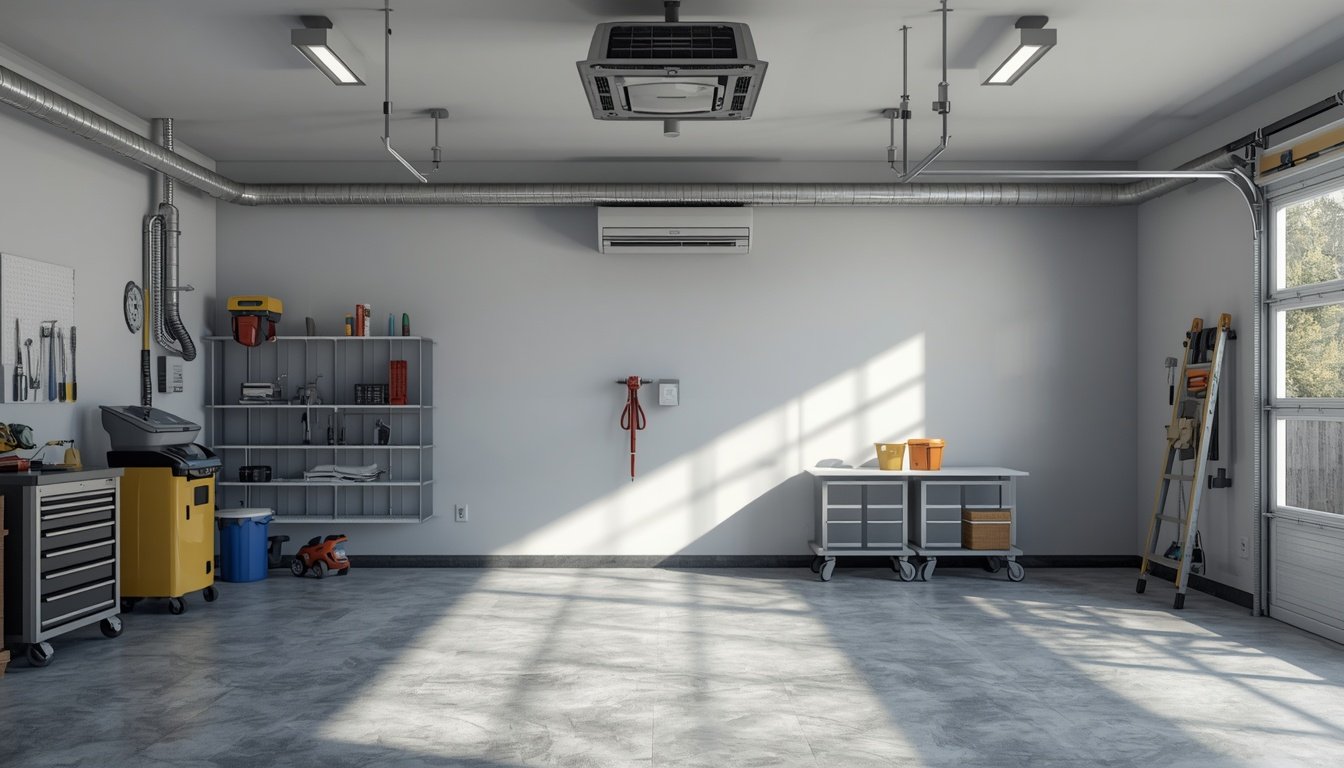
Annual garage heater maintenance prevents unexpected breakdowns and keeps your system efficient. Checking your heater at least once a year ensures safe operation, extends the equipment’s service life, and can help you spot minor issues before they become expensive repairs. If you want dependable heat throughout the colder months, you should follow a consistent maintenance routine that covers all key components.
Safety Checks and Power Inspection
Start your annual maintenance by turning off power to the garage heater. This is essential to prevent electrical shock or accidental activation while you’re inspecting the unit. Carefully examine any exposed wiring or power connections for signs of wear, corrosion, or loose fittings. Faulty electrical parts can lead to unreliable operation or even pose a fire risk.
Next, check the control thermostat for accurate readings and smooth operation. Thermostat calibration is crucial for maintaining consistent garage temperatures. Faulty controls can cause your heater to run inefficiently, increasing energy costs.
Inspect any venting or exhaust systems to make sure they are clear of obstructions. Blocked vents can trap dangerous gases inside your garage and prevent the heater from working correctly. Finally, if your heater uses natural gas or propane, look over all hoses and connections for leaks—using a soap and water solution if necessary—to support safe operation and peace of mind.
Cleaning and Filter Maintenance
A clean heater operates more efficiently and safely. Start by removing any dust, spider webs, or debris from around the heater and inside its housing. Accumulated dirt can block airflow and cause components to overheat or malfunction. Use a soft brush or vacuum to gently clean fan blades and internal surfaces, being careful not to disturb wiring or sensitive parts.
If your garage heater has an air filter, check its condition. A clogged filter reduces system efficiency and places extra strain on the blower motor, potentially leading to early failure. Replace disposable filters with new ones or clean reusable filters according to manufacturer instructions. For units without filters, pay extra attention to keeping air inlets and outlets free from obstruction.
Confirm fans and motor housings are moving freely. If you notice unusual noise or vibration when running the unit, foreign material or imbalance could be to blame. Annual cleaning ensures clear airflow and optimal system health, which is especially important for large-space heating systems used in workshops or multi-bay garages.
Inspection Tasks to Complete Annually
- Test safety shut-off controls for correct function
- Inspect burners and heat exchangers for rust or cracks
- Lubricate moving parts if specified by the manufacturer
- Check for odd sounds or smells during a trial run
- Verify proper ignition and flame appearance
These tasks round out a thorough annual garage heater check. Safety shut-offs should halt operation if unsafe conditions are detected, so confirming their function is critical. Examining burners and heat exchangers can identify corrosion or damage that, if left untreated, might lead to leaks or inefficient combustion. Lubricating motors or bearings, if applicable, reduces wear. A trial run lets you observe how the unit operates under normal conditions—any strange noises or smells could indicate hidden issues. Always ensure the flame is steady and correctly colored, as this reveals fuel combustion quality and overall system health.