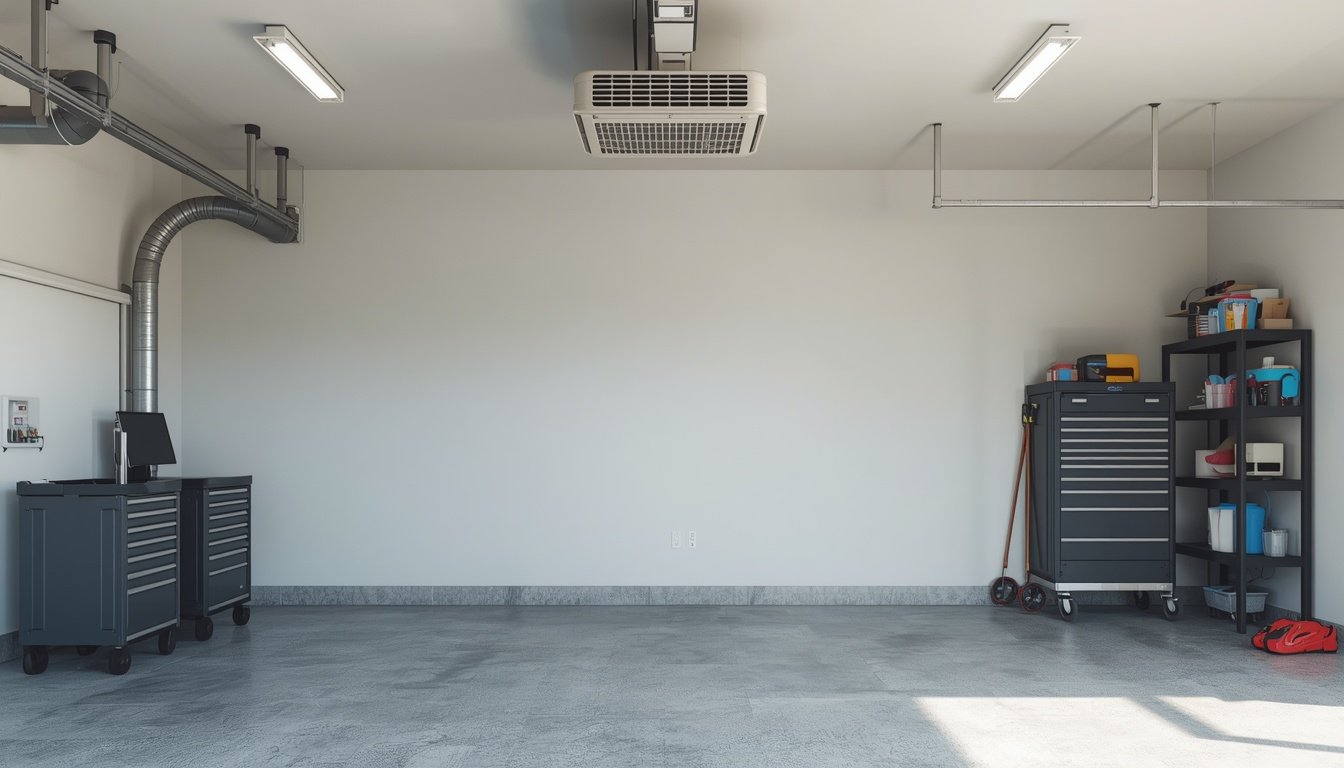
The best spot to install a garage unit heater is on the ceiling or high on an outside-facing wall, close to where the cold air enters but far from doors for consistent warmth and safe airflow. Choose an area with enough clearance from combustible materials and sufficient access to power and vent connections if required. This setup provides even heat distribution and ensures the heater works efficiently without creating hot or cold spots.
Key Factors to Consider Before Installing
Clearance is the most critical factor—you need space around the heater per the manufacturer’s guidelines. Typically, allow at least 18 inches from walls, 12 inches below, and several feet from flammable items. This prevents hazards and helps airflow. Also, position the unit so heated air covers the garage work area, not blocked corners.
Access to gas, electrical, or vent lines affects installation. For a gas-powered garage unit heater, the proximity to the gas line and outside vent reduces complex plumbing and venting runs. Electrical-only heaters must be near a dedicated 240V outlet. Make sure the mounting location can support the heater’s weight, especially with ceiling installations.
The direction the heater blows air matters. Aim outlets toward open space, not direct at vehicles or stacked storage. A well-placed unit heats faster and uses less energy. If you have a larger space, consider consulting a guide on choosing a large garage unit heater to ensure sufficient heating capacity for your needs.
Common Placement Options and Their Pros & Cons
- Ceiling-Mounted Near a Garage Door
- Wall-Mounted Opposite the Work Area
- Corner Placement Above a Workbench
- Centered on a Long Wall
Ceiling-mounted heaters near the garage door quickly warm incoming cold air but can be harder to access for maintenance. Wall-mounted units opposite the main work area keep heat focused but may be limited by wall obstructions. Placing the heater in a corner above a workbench is useful for direct warmth at a task station, though it may cause uneven heat in larger garages. Centering the heater on a long wall distributes air most consistently, but installation can be more complex due to wiring and venting. Consider your usage patterns and the garage’s layout to find the most effective placement for your needs.
Installation Mistakes to Avoid for Safety and Performance
Avoid installing the heater too close to combustible items such as stored fuel, oily rags, or lumber. Failing to follow clearance requirements increases fire risks and shortens the heater’s lifespan. Do not place units where airflow will be blocked by shelves, cabinets, or vehicles—restricted air reduces efficiency and can cause overheating. Another mistake is ignoring the need for proper venting with gas models, which can lead to carbon monoxide buildup.
Don’t overlook the electrical requirements. Overloading existing circuits or using extension cords adds hazards. Always use a dedicated circuit for electric heaters. Lastly, skipping professional installation may seem to save money, but improper mounting or wiring creates bigger problems later. If you’re unsure about connections or venting, consult a licensed technician to ensure safety and compliance with code. Prioritizing correct placement and adherence to safety requirements will help your garage unit heater provide reliable warmth for years.