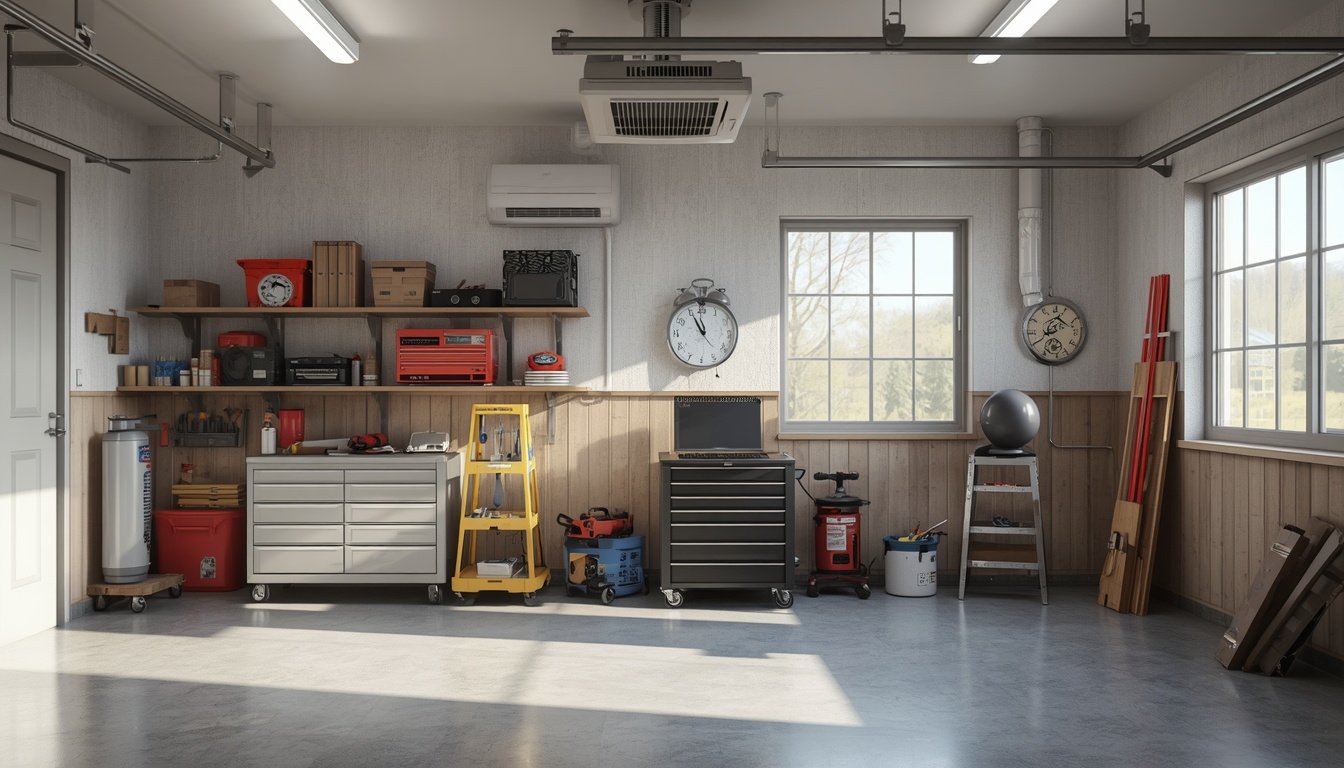
Effective climate control in large workshops and commercial bays ensures productivity, comfort, and the protection of sensitive equipment. The best approach combines proper equipment sizing, air distribution, and advanced control systems, since standard residential solutions rarely suffice. For those needing high-performance solutions, options like a specialized heater for a workshop or pole barn can provide the raw power and durability required for these demanding environments.
Unique Climate Challenges in Large Industrial Spaces
Large workshops and bays usually suffer from uneven temperature zones. Tall ceilings and huge square footage make air stratification a recurring problem. Hot air rises, leaving work areas chilly—even when heaters run nonstop.
Frequent door openings for vehicles or equipment introduce continuous drafts and temperature swings. Standard heating or cooling systems are easily overwhelmed. In regions with harsh winters or sweltering summers, inadequate climate control can halt production entirely.
Special attention must be given to building insulation. Many commercial facilities have minimal insulation or exposed steel construction. This results in rapid heat loss in winter, or overwhelming solar gain in summer months.
Moreover, airborne contaminants from fabrication, welding, or woodworking demand strong ventilation. Yet, venting without heat recovery leads to greater losses and energy waste. Success in these environments demands an integrated approach—balancing heating, cooling, and airflow while not sacrificing efficiency for power.
Key Heating and Cooling Solutions for Commercial Bays
The most effective climate systems for workshops and bays are tailored to handle high cubic footage and continuous operations. Direct-fired unit heaters and high-BTU forced air furnaces remain popular. Their configuration allows rapid heat delivery and keeps up with fluctuating demands.
For cooling, large commercial-rated evaporative coolers or rooftop packaged air conditioners are often used. These units deliver robust airflow output and can reduce temperatures quickly, even with frequent air exchanges. Ductless mini-split systems offer flexibility for cooling (and zoned heating) specific work areas.
Radiant tube heaters are especially effective in bays with high ceilings. They keep floors and workbenches warm without wasting energy on unoccupied upper air. For mixed-use spaces or those requiring year-round comfort, hybrid systems integrating both radiant and forced-air components often provide the best results.
Final equipment choices should reflect workload, insulation, number of staff, and the type of activities that take place. Sizing these systems correctly is crucial to avoid performance gaps and excessive costs.
Benefits of Zoned Climate Control in Large Workshops
- Personalized temperature settings for different activity zones
- Improved energy efficiency and reduced operating costs
- Enhanced comfort and safety for staff across all workstation areas
Dividing a large facility into climate-control zones delivers substantial benefits. For example, storage or staging areas may need less heating than high-traffic assembly lines. With zoned systems, operators can concentrate heat or cooling where and when it is truly needed.
This approach slashes unnecessary energy use—cutting costs while maintaining individualized comfort for workers. Many modern zones are managed by smart controls, offering automated temperature adjustments throughout the day. Zoning also curtails the risk of condensation by maintaining even temperatures across all sections, protecting equipment and inventory.
Beyond comfort, zoning helps comply with safety and regulatory standards in complex environments. When paired with targeted exhaust or ventilation, it prevents overheating near machinery and avoids cold drafts in worker-concentrated areas.
Essential Features for Heavy-Duty Climate Systems
- High airflow and rapid recovery capabilities
- Integrated filtration and dehumidification
- Programmable or smart controls for automation
Heavy-duty industrial climate systems must move large volumes of air quickly. High airflow is essential to prevent hot or cold spots from developing. Rapid recovery ensures the workspace returns to target temperatures swiftly after bay doors open or processes shift.
Integrated air filtration extends system life and protects workers from lingering welding fumes, dust, or chemicals. Dehumidification reduces condensation, which can corrode machinery or damage sensitive inventory. In humid climates, this feature is as critical as temperature control itself.
Lastly, programmable thermostats or smart climate controls are vital for large facilities. They automate energy use, align comfort levels with occupancy, and provide remote monitoring capabilities. Combined, these features transform heavy-duty systems from simple heaters or coolers into productivity-boosting assets.
Maintenance and Operational Considerations
Reliable operation of large-scale climate systems requires regular maintenance. Dust and debris accumulate quickly in bays with heavy machinery, so filters, blowers, and exchanger coils must be inspected and replaced frequently.
Professional annual servicing helps catch early signs of wear, combustion issues, or refrigerant leaks. Many commercial heaters and AC units are designed for easy part access and rapid service. It’s also smart to invest in systems with robust warranty coverage and accessible support from local contractors.
Operational routines should include monitoring for unusual odors, noises, or uneven performance. Smart controls can often send alerts for emerging issues, but a quick daily walk-through remains essential. Addressing small problems early ensures uninterrupted worker safety, comfort, and productivity—especially during peak demand seasons.