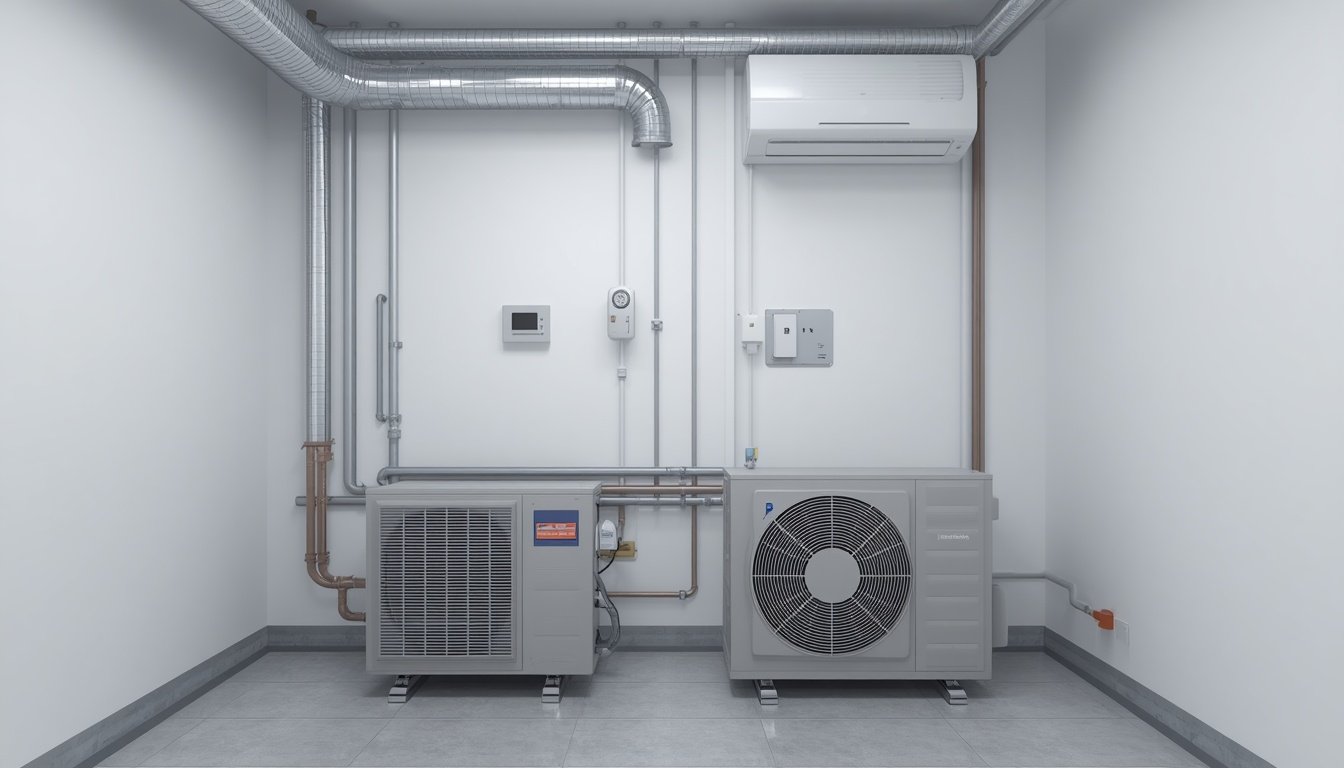
Yes, a mini split system can heat an entire house, but the outcome depends on the size and design of both the system and the home itself. When properly sized, designed, and installed, multiple mini split indoor units can provide consistent heating throughout a whole house. However, there are important limitations, and not every home is ideally suited for whole-house mini split heating.
How It Works
Mini split systems use one or more outdoor heat pumps connected to multiple indoor air handling units. Each indoor unit is installed in a specific zone or room and delivers heated or cooled air directly to that area. These systems operate without ductwork, relying on refrigerant lines and electrical connections between the outdoor and indoor components.
The heating process involves the outdoor unit extracting heat from outside air—even in cold weather—and moving it indoors via the refrigerant. Advanced inverter-driven compressors allow mini splits to maintain high efficiency and stable temperatures, especially in well-insulated, airtight homes.
What It Can Do
Mini split systems can deliver reliable heating for an entire house if the right system is chosen and installed strategically. Capabilities include:
- Providing independent temperature control for different zones or rooms
- Operating efficiently in moderate and some cold climates
- Reducing energy losses associated with ductwork
- Offering flexible installation in new or existing homes
When each zone is equipped with an appropriately sized indoor unit, the system can deliver even heating across all living spaces. Modern mini splits often feature advanced controls for scheduling, remote management, and integration with smart home platforms. This flexibility makes them suitable for various home layouts, including multi-story buildings and additions. Additionally, because each zone is separate, occupants can save energy by heating only the rooms in use.
Limitations and What It Cannot Do
While useful in many scenarios, mini split systems have specific constraints that should not be overlooked. These factors can affect their ability to heat a whole house efficiently or at all:
- May require multiple indoor units and a more complex installation for larger or multi-story homes
- Performance can decrease in very cold climates unless a cold-climate rated model is used
- Requires careful system sizing and placement to prevent hot or cold spots
- Not ideal for homes with significant open spaces or unusual layouts without additional engineering
- Can be less effective if the home’s insulation or air sealing is insufficient
Homeowners should recognize that not all mini splits perform equally well in extreme conditions, especially if the equipment is not designed for cold climates. In some cases, backup heat or supplemental systems may still be needed. Mini splits also depend on electricity, so they will not function during a power outage unless paired with backup power sources. Installation cost may rise as more indoor units or high-capacity outdoor units are required for large homes. Always consult with a professional to ensure compatibility and correct sizing for the entire house.
When It Works Best
Mini split heating systems work best in homes where each area or room can have its own indoor unit and where the level of insulation and air sealing is high. They are highly effective in energy-efficient new builds, smaller homes, open-plan spaces, or during whole-home remodels. They are also advantageous when ductwork is not present or is impractical to install.
Multi-zone systems excel in situations where occupants benefit from customized zone comfort or need to control temperatures independently. When paired with the right system capacity and design, a mini split for whole-home heating and cooling offers steady, efficient warmth with low energy waste. However, achieving whole-home effectiveness depends on following best practices for layout, placement, and sizing of every unit involved.
Common Misconceptions
It is sometimes assumed that a single mini split can warm an entire house regardless of home size or layout. In reality, multiple indoor units are usually required for whole-home coverage.
Another misconception is that all mini splits work equally well in freezing climates. Only cold-climate certified models are designed to maintain capacity at low outdoor temperatures.
Final Answer Summary
Mini splits can heat an entire house if properly designed and installed with enough indoor units to match the home’s zones and square footage. Success depends on system sizing, layout, climate, and insulation quality. Limitations apply, especially for very large, poorly insulated, or multi-story homes where additional planning or backup heating is often necessary.