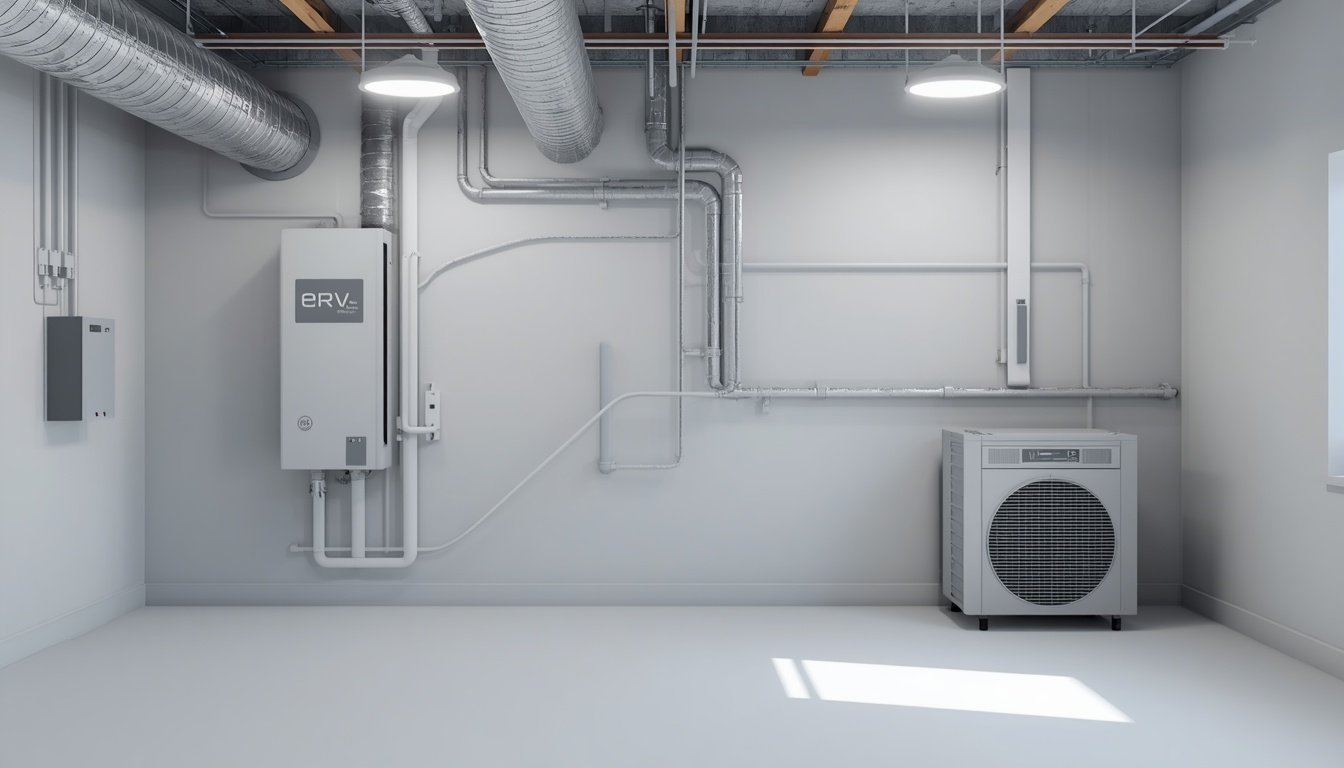
Energy Recovery Ventilators (ERVs) can help with humidity, but their effectiveness depends on your local climate and how they’re used. In general, ERVs exchange stale indoor air with fresher outdoor air while transferring heat and some moisture between the two streams. This means ERVs can help maintain indoor humidity at more stable levels, but they’re not a dedicated dehumidifier and their impact is more about moderation than active removal of moisture.
Why It Matters
Managing humidity is essential for comfort, indoor air quality, and protecting your home from moisture-related problems. High indoor humidity can lead to condensation, mold growth, and discomfort. Low humidity may cause dryness, respiratory irritation, and static electricity. Many homeowners look to ventilation systems like ERVs to find a balance, especially in airtight modern homes that trap moisture from daily activities.
ERVs are appealing because they ventilate while recovering energy and moderating humidity transfer. Unlike basic exhaust fans or HRVs—Heat Recovery Ventilators, which only handle heat—ERVs move some moisture during air exchange. This can be particularly helpful in climates where both excess and insufficient humidity are seasonal concerns. However, it’s important to understand what ERVs do, what they don’t do, and how they fit into a larger whole-home humidity control strategy.
Most Important Features to Prioritise
When considering an ERV for humidity management, focus on features and specifications that most significantly affect your home’s comfort and energy efficiency. Understanding these priorities will help you make an informed decision as you evaluate your options.
- Moisture Transfer Efficiency: Look for an ERV that specifies its latent (moisture) transfer performance. Higher efficiency can help maintain more stable indoor humidity levels, particularly when outdoor conditions are extreme.
- Airflow Rate (CFM): The unit’s capacity to exchange air—the Cubic Feet per Minute (CFM)—affects both ventilation and humidity moderation. Match the CFM to your home’s size and needs.
- Climate Suitability: Not every ERV is optimal for all conditions. Check if a model is designed for your regional climate—some perform better in humid, others in dry, environments.
- Control Options: Advanced controls, including humidity sensors and variable-speed fans, allow for more responsive management based on real-time indoor and outdoor conditions.
While choosing an ERV, prioritize genuine moisture transfer ratings over generic marketing claims. Some systems perform well only in certain climates or operating modes. Also, ensure the installation and ongoing maintenance will be manageable for your household. The ability to tune or automate ventilation rates can make a significant difference to comfort throughout the year, especially in regions where outdoor humidity fluctuates. When in doubt, consult with an HVAC professional about matching ERV features with other equipment, such as whole-home dehumidifiers, for a truly balanced environment.
Features That Matter Less for Most People
Some ERV features sound impressive but offer little impact for average homeowners focused on humidity. It’s helpful to know which aspects can usually take a back seat during your evaluation.
For many, ultra-premium filtration (such as HEPA or carbon filters), Wi-Fi connectivity, or niche energy-saving certifications may not meaningfully affect daily comfort or humidity control. These extras might be important if you have specific health or smart home needs, but for basic humidity moderation, they’re rarely decisive.
Similarly, the size and finish of the housing, or variable mounting options, tend to matter only if you face unique installation constraints. If your goal is climate comfort and energy savings, don’t get sidetracked by luxury add-ons unless they solve a specific challenge in your living space. Focus your research on the ERV’s ability to transfer moisture and match your climate zone’s typical humidity swings.
How to Match Features to Your Situation
Effectively managing humidity with an ERV starts with an honest assessment of your home, habits, and climate. Homes in hot, humid climates benefit most from ERVs that efficiently exhaust some moisture, while temperate regions may use ERVs primarily to prevent over-drying in winter. Neither extreme should rely solely on an ERV for perfect humidity control, but choosing wisely can reduce the need for supplemental devices.
If you live in an airtight or newly built home, it’s especially important to support controlled ventilation for avoiding trapped moisture. Consider home size, number of occupants, and activities that add moisture—like frequent cooking or showers. Pairing ERVs with dedicated dehumidifiers or humidifiers may be the best approach if your conditions are especially challenging. For a complete overview of how different models stack up in real homes, the guide to the best ERV for whole house covers practical factors to consider in more detail.
Consulting with a professional can help you integrate an ERV into your home’s larger system, coordinate with existing HVAC setups, and fine-tune your plan for year-round comfort. Don’t overlook maintenance access or the unit’s expected lifespan—both can influence how well your ERV continues to help with humidity as seasons and circumstances change.
Final Thoughts
ERVs play a useful role in moderating humidity, particularly when compared to other basic ventilation options. They’re not a magic solution—expect moderation rather than full dehumidification or humidification. Their true benefit is helping you avoid extremes by exchanging moisture and heat as you swap indoor and outdoor air.
To make the most informed decision, consider your local climate, home design, and personal comfort goals. Focus on transfer efficiency, airflow, and system flexibility instead of getting distracted by premium add-ons unrelated to humidity. Used as part of a whole-home approach, an ERV can offer more stable comfort and support the health of your living space for years to come.