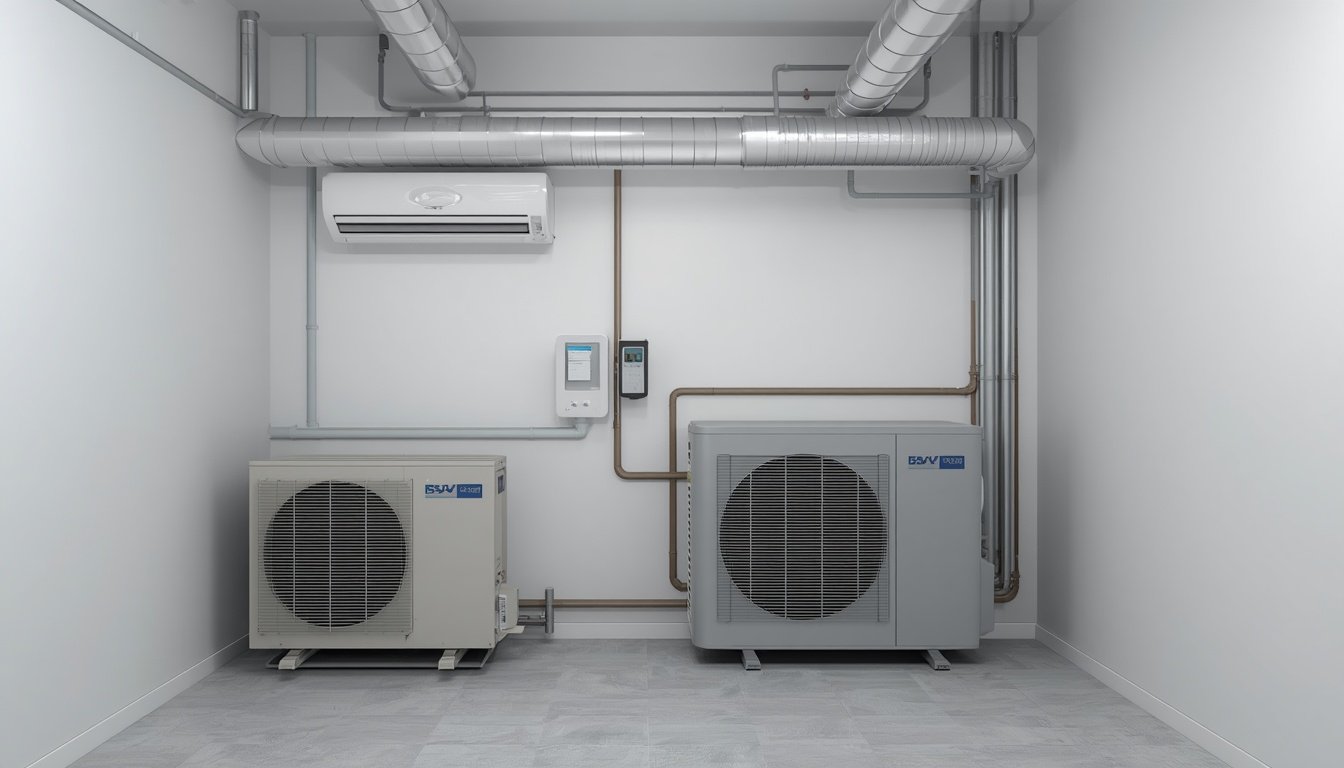
Mini splits can work in cold climates, but their effectiveness depends on the specific unit and outdoor temperatures. Many modern mini split heat pumps are equipped to provide reliable heating well below freezing. However, not every mini split delivers strong performance during extreme cold, and it is important to select models designed for low-temperature operation.
How It Works
Mini splits operate using a heat pump mechanism. They transfer heat from the outdoor air to the inside of a building, even in winter. A refrigerant circulates in a closed loop, absorbing heat outside and releasing it indoors. Advanced models use high-performance compressors and refrigerants optimized for low temperatures to increase efficiency in cold weather.
What It Can Do
Cold-climate mini splits offer meaningful advantages over some traditional heating systems, especially where ductwork is impractical or renovations are needed. Their features help maintain indoor comfort, provide energy-efficient heating, and lower operating costs. Below are practical capabilities for mini splits engineered for winter performance:
- Deliver heat at outdoor temperatures as low as -5°F to -15°F with select models
- Maintain consistent indoor temperatures with variable-speed compressors
- Offer zone-based control for specific rooms or spaces
- Help reduce total energy use compared to electric baseboard heating
- Operate quietly and without direct combustion, reducing indoor air pollutants
While mini splits can perform well in many winter situations, their efficacy hinges on proper sizing, installation, and ongoing maintenance. Advanced features like inverter technology and cold-weather rated refrigerant also play a role in boosting efficiency. When evaluating your options, consider the required heating load and any unique site conditions to ensure optimal cold weather performance.
Limitations and What It Cannot Do
Despite their strengths, mini splits do face challenges in extremely cold environments. Not all units can maintain high heat output when outdoor temperatures fall well below zero. Some models may require supplemental heat sources during severe cold snaps. Additionally, ice buildup on the outdoor unit and reduced efficiency at the lowest temperatures can impact overall heating capacity and reliability.
It is important to differentiate between standard mini split heat pumps and models specifically engineered for cold climates. Traditional or lower-end units may shut off or run inefficiently below freezing. Selecting a system not designed for your region’s worst temperatures can lead to inadequate heating and higher energy bills. Even high-performing mini splits can experience efficiency losses or require defrost cycles that interrupt heating temporarily.
If your home is in a climate prone to extreme, prolonged cold, it is critical to research the best mini split for cold climates to avoid performance gaps and ensure reliable winter heating.
When It Works Best
Mini splits achieve their best results in areas with moderate to moderately cold winters, or in buildings with strong insulation and air sealing. They are highly effective for supplemental heating in individual rooms, home additions, or spaces where central ducts do not reach.
Homes with less severe temperature drops (rarely below 0°F) see the most consistent benefit. In these cases, mini splits can serve as the primary heating source throughout the winter. However, in regions experiencing sustained subzero temperatures, investing in a cold-climate rated system and using backup heat is often necessary for whole-home comfort.
For a closer look at the cold-climate specs, installation requirements, and buyer fit, read our Senville AURA Series Mini Split review.
Common Misconceptions
It is not true that all mini splits are weak in winter; modern cold-climate units are engineered specifically for low temperatures. Another misconception is that mini splits replace all backup heat needs—some situations still demand a secondary heat source for safety or peak load coverage.
Final Answer Summary
Mini splits can be effective in cold climates if properly selected and installed. Their capability depends on technology and low-temperature ratings, with cold-climate models designed to heat efficiently even in freezing conditions. For harsh winters, careful model selection and possible backup heat are essential for consistent comfort.